
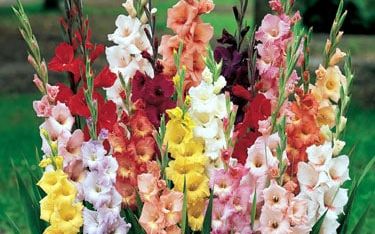
The month of August has 2 birth flowers – the Gladiolus and the Poppy!
There is a soft, golden magic that settles over the late summer air as August arrives. It is a time of transition and reflection, a pause between the high energy of midsummer and the crisp, refreshing approach of autumn. Perfectly capturing this blend of lingering warmth and changing seasons are August’s birth month flowers, the soaring gladiolus and the playful poppy. Together, they tell a story of resilience and inspiration honoring those whose birthday falls during August.
Gladiolus Symbolism
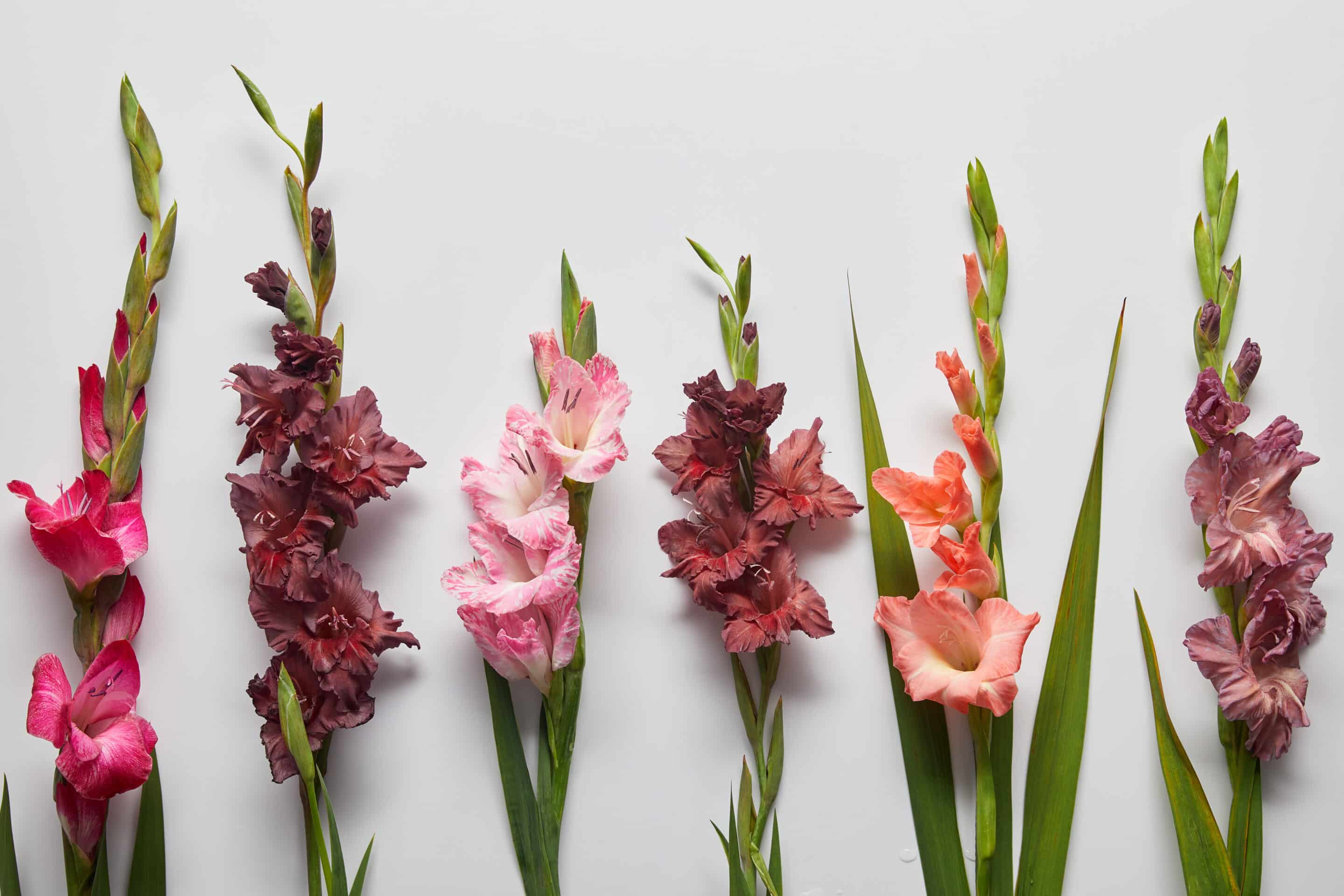
Wrapped in its sword-like silhouette, the gladiolus has long served as a symbol of strength of character, integrity, and honor. During the Victorian era, secret lovers used the flower to communicate passion; sending a gladiolus signified that the recipient’s beauty had “pierced the heart” of the giver. It’s upward, sequential opening—where lower buds bloom first before rising to the top—symbolizes personal growth, patience, and reaching new heights. When you gift or display these gorgeous Glads, you aren’t just presenting a stunning flower, but sharing a meaningful nod to inner strength, devotion, and heartfelt sincerity.
The History of Gladiolus
Gladioli were named by the ancient Roman naturalist Pliny the Elder, who was reminded of Roman swords when he saw them. In fact, the word gladiolus translates to “little sword,” and according to ancient lore gladiators would often wear the plant’s corms around their necks, believing the charm would protect them from death and bring victory. These botanicals were also valued in ancient herbal medicine, where crushed corms were mixed with goat’s milk to soothe colic or baked into bread as a traditional remedy. By the 18th century, vibrant African species were brought to Europe via trade routes, triggering a massive hybridization boom among 19th-century botanists. Victorian gardeners fell head over heels for these tall beauties, transforming what was once a wild, modest blossom into the show stopping, multi-colored spires we adore today.
Where it Traditionally Grows
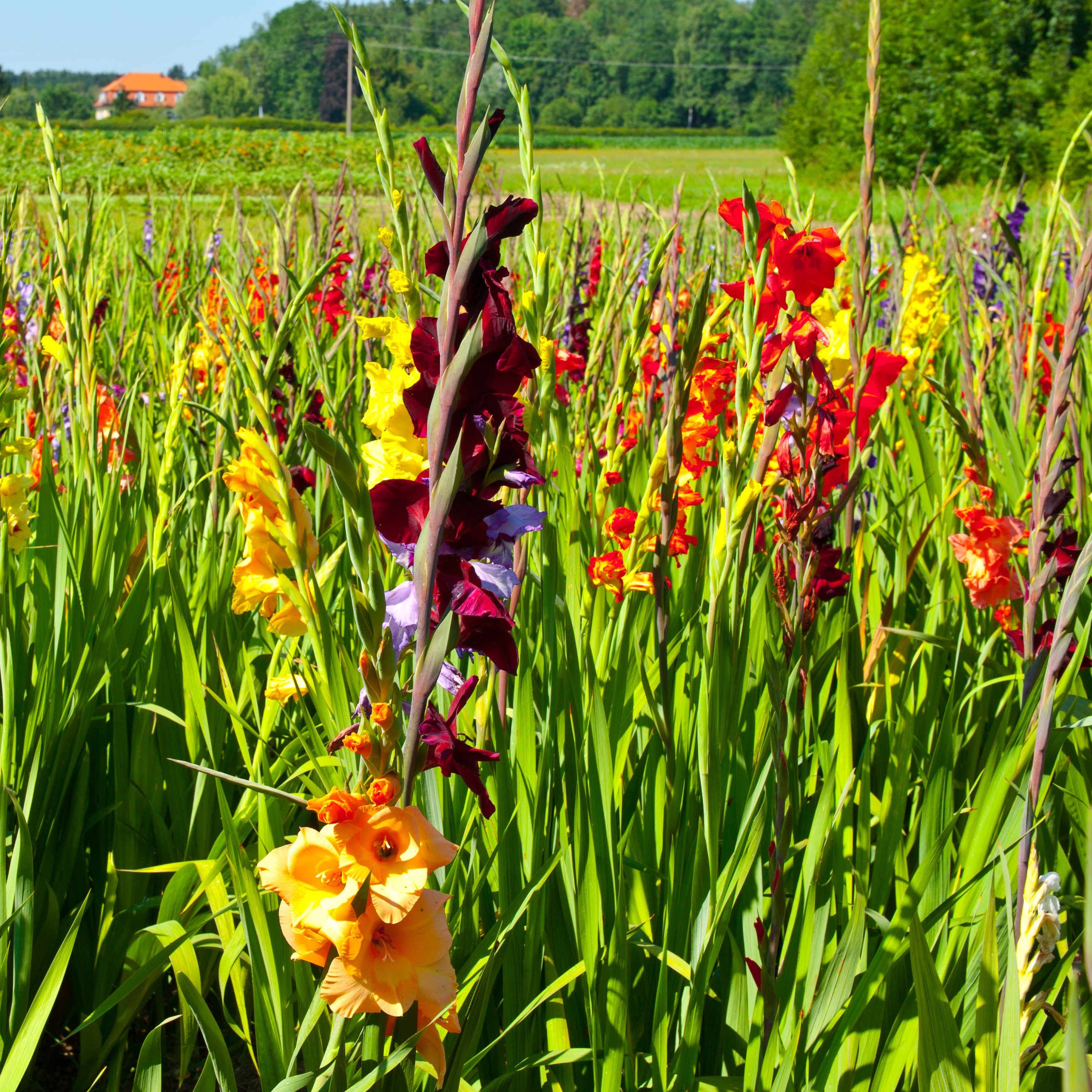
250 of the world’s 300 wild species are native to Southern Africa, particularly the Cape Floral Region. In their native habitats, Gladiolus didn’t look like today’s giant cultivated hybrids; instead, they are delicate, slender-stemmed treasures clinging to rocky mountain cliffs, stream banks, and coastal scrublands. Mediterranean and European species also carved out wild homes, blooming in grassy meadows, woodland clearings, and along warm coastal breezes across Eurasia. Today, flower growers love cultivating them in regions with hot, sunny days and sandy, well-draining soil, such as the coastal fields of California, the Netherlands, and Southern Europe.
How to Care for Gladiolus Flowers
- Remove the top bud from each stem as soon as you receive them.
- Rehydrate them in warm water.
- Store in indirect sunlight before arranging.
- Vase life is 8-10 days.
What Flowers Go Well with Gladiolus in an Arrangement?
- Roses – Roses always draw an eye and Gladiolus’s soaring height offers a nice contrast to the rich blooms of a rose.
- Hydrangea – Hydrangea brings serious heft to compliment Gladiolus’s height, filling in large volumes of space with only a few stems.
- Dahlias – Create a striking contrast in form and height when Gladiolus is cut to stand 1.5 times higher than the Dahlias.
Poppy Symbolism
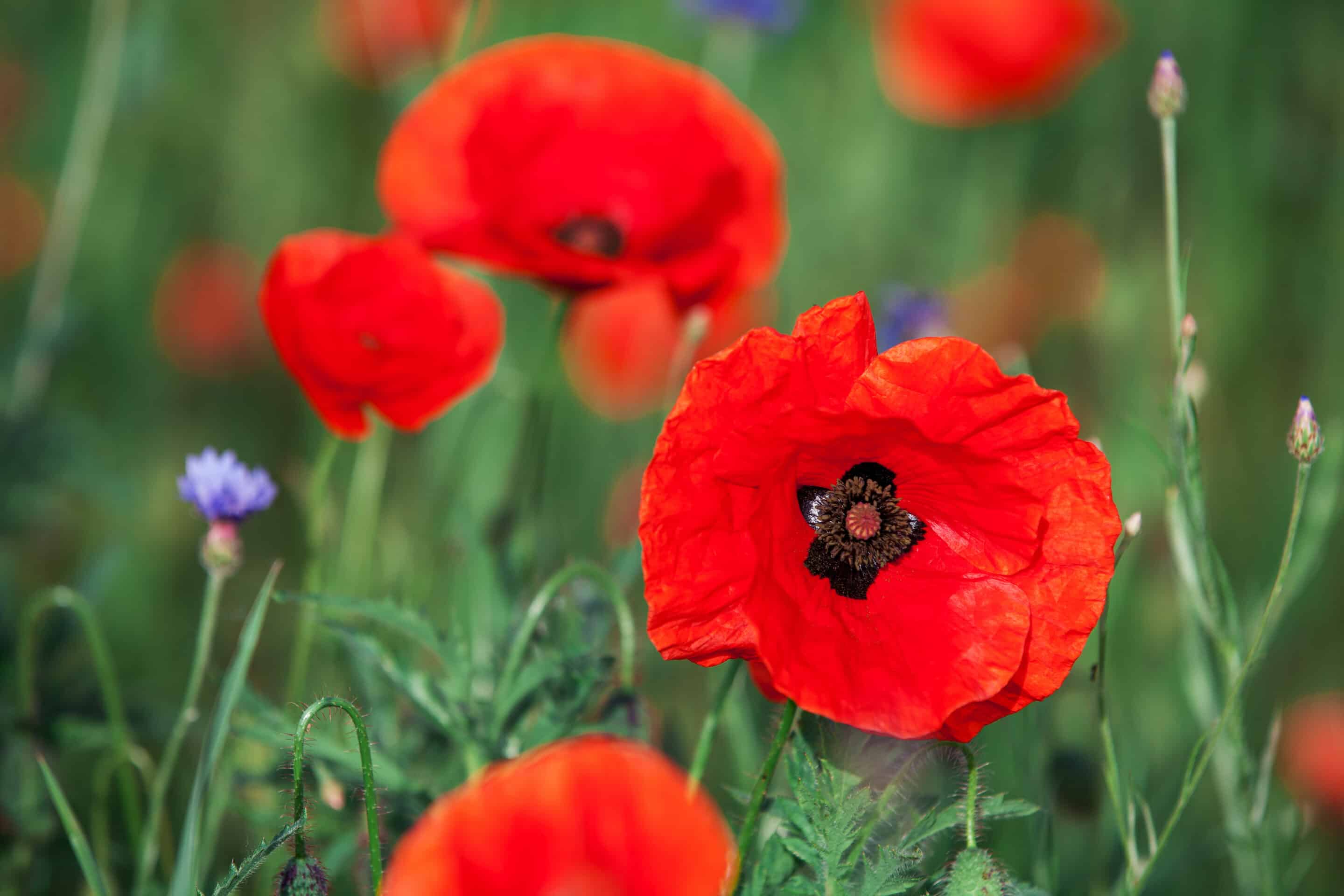
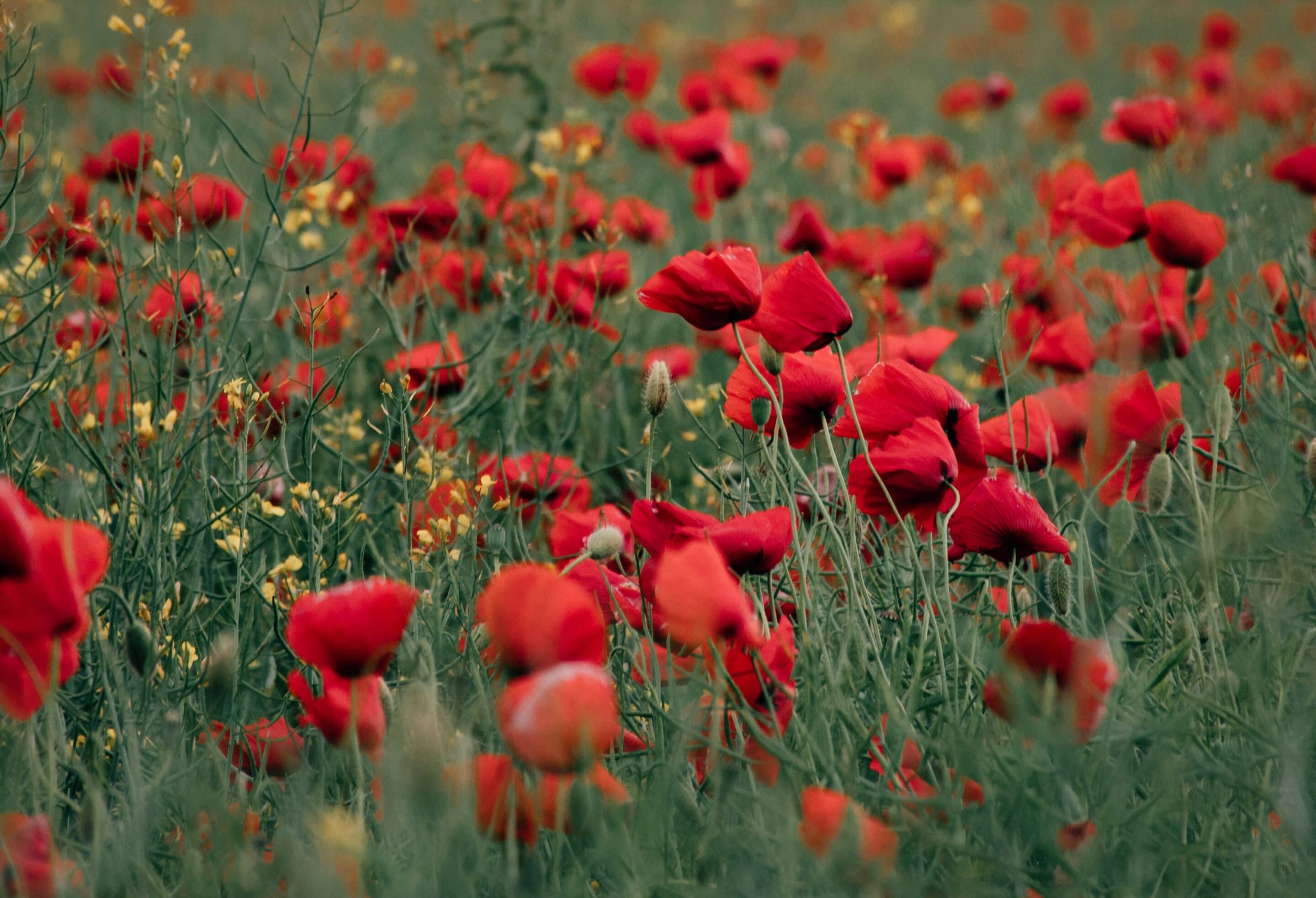
Steeped in myth and poetry, the poppy carries a rich tapestry of meanings ranging from peaceful sleep and remembrance to passionate hope and renewal. In Greek mythology, Hypnos, the Greek god of sleep, carried a poppy stem to bestow gentle dreams, linking the flower to peaceful rest and healing. In modern times, the iconic red corn poppy stands as an emblem of honor and remembrance of World War I poem. Color adds another charming layer to their symbolism: white poppies denote peace and consolation, while bright yellow and orange varieties symbolize success, vitality, and prosperity. When gifting or displaying, the poppy’s ability to bloom abundantly after soil disruption makes it a heartwarming symbol of human resilience and rebirth.
The History of Poppies
Poppies hold one of the oldest recorded relationships with human civilization, with Sumerian tablets affectionately calling them the “joy plant.” In ancient Egypt, poppies were considered so precious that they were placed inside royal tombs to accompany rulers into the afterlife. The Minoan civilization on Crete even worshipped a revered “Poppy Goddess,” whose crown was adorned with seed pods celebrating the bloom’s soothing powers. Classical Greeks later linked the blossom to Demeter, the goddess of agriculture, believing that wild poppies growing among crops guaranteed a generous harvest. Over centuries, these delicate blooms traveled along ancient trade routes, evolving from sacred medicine into one of history’s most storied botanicals.
Where it Traditionally Grows
Wild poppies now carpet meadows across the globe but originally they come from the sun-drenched landscapes of the Mediterranean and Western Asia. In their native habitats, these resilient flowers thrive in well-draining soil, and maximum sunlight. One of the poppy’s most interesting features is the incredible survival capability of its tiny seeds, which can sit dormant deep underground for decades waiting for the right conditions. This unusual superpower explains why brilliant poppies burst into bloom whenever soil is freshly turned over on farms, along roadsides, or on historic battlefields. Wherever they land, these spirited wildflowers bring an instant splash of joyful, dancing color to even the most unexpected places.
How to Care for Poppies
- Place in warm water to bloom.
- Keep in sunlight and clean warm water a few days before their peak bloom.
- If some of the flowers have not bloomed, carefully peel open the pod to expose the flower inside. It should Bloom in a few hours.
- Vase life is 4-6 Days
What flowers go well with Poppies in an arrangement?
- Sweet Peas – Adding the wonderful, fragrant Sweet Pea elevates any arrangement but when added to Poppies the ruffled texture of the Sweet Pea contrasts the Poppy without overwhelming it.
- Anemones share a similar visual appearance but a slight structural difference creating a modern, unified, clean look with enough variation to catch the eye.
- Ranunculus – Ranunculus’s tight bloom provides a contrast to the poppy’s delicate thin petals but both stems have a similar fall in them making Ranunculus a great base for Poppies to “float” on.
Curious what the other birth month flowers are? Check out our guide to every month’s birth flower!
Lead Photo Credit: Leslie Jones
Joan Wyndrum

Joan is one of the founding partners of BloomsByTheBox.com. She holds degrees in both commercial design and business administration/marketing. One of her earliest jobs was in the retail flower business. For the past 30 years she has consulted a wide variety of clients - many in the wholesale florist industry - in marketing, design, and business operations. In 2007, she and partner Larry Fox joined forces to combine their talents and knowledge to create BloomsByTheBox.com to bring the beauty of the growers' fields directly to customers' doors. Joan is frequently asked to contribute to popular publications to discuss all aspects of the flower and floral design, including The Knot, Zola, SheFinds, What To Expect, AP News, and Sunset among others.