Quick Answer
For most DIY couples in 2026, Blooms By The Box is the best place to buy wholesale wedding flowers. Online wholesale retailers come second, and a florist earns a spot only for a few key pieces.
Why first? It sells to the public at wholesale prices, ships fresh stems nationwide by FedEx Priority Overnight, and pairs flowers with supplies and free design help. Cheaper routes exist. A warehouse club can win on plain roses, but you give up choice and guidance, and honestly that trade stings most when you are stripping stems alone the night before.
Key Points
- Blooms By The Box ranks first for 2026 , ahead of online wholesale flower retailers, warehouse clubs, local wholesale flower markets, grocery stores and a florist for a few key pieces.
- In 2018, The Knot's Real Weddings Study put the median wedding flower spend at $1,900 , with couples hosting 51 to 100 guests spending $2,400 on average.
- A November 7, 2026 Florists' Review pricing formula marks flowers up 3.5 times , so $12 of flowers becomes $42 before any design labor is added.
Buying wholesale flowers used to mean a predawn trip to a flower market, ideally with a florist friend who knew the vendors. That world has opened up. FloralDaily has reported on new online services that give everyday shoppers access to wholesale market flowers, with lower prices in exchange for doing your own stem prep at home.
Couples were already looking past the florist. In 2018, a national wedding survey found that 59% of couples included a florist among their vendors, so a large share handled flowers some other way. A floral designer quoted in that same research gave a simple rule of thumb: flowers run about 10% of the overall wedding budget, or closer to 15% when they are a top priority.
So the question is no longer whether you can buy wholesale. It's where.
That is what this guide sorts out. I rank six kinds of sources, from online wholesale sellers to a florist who handles only your bouquets, and I judge every one on the same six things:
- Selection: how many varieties and colors you can actually choose from.
- Minimum and who can buy: whether a regular couple can order, and how much they must spend.
- Shipping: how the flowers reach you, and how close to your date.
- Price transparency: whether you can see real prices before you commit.
- DIY help: recipes, tutorials and a person to call.
- Reliability: whether the stems show up fresh when you need them.
You'll also find a side-by-side comparison table, a simple guide to matching your wedding to the right source, and the ordering timeline that keeps your flowers fresh for the big day. First up is the source that checks the most boxes for a 50 to 200 guest wedding.
You already know the picture: armfuls of fresh flowers, a few friends around a kitchen table, and centerpieces you made yourself. The harder part is knowing where to buy the stems. My ranking for 2026 puts Blooms By The Box first, followed by online wholesale flower retailers, warehouse clubs, local wholesale flower markets, grocery stores, and a florist for a few key pieces.
Why that order? Two things matter more than any single flower: stems you can trust and a delivery day you can plan around. Quality without a dependable delivery day leaves you scrambling.
Plan your helpers from day one, too. Unpacking and hydrating a wedding's worth of stems is real work on the evening they arrive.
Florists, meanwhile, are getting easier to compare. On The Wedding Reporter Podcast in March 2026, a floral trends expert described couples entering a date, location and color palette and getting a custom florist proposal right away. Your DIY plan now has to stand next to a real quote, so the first thing to see is how I judged each source.
Questions this article answers
Why does where you buy wedding flowers matter so much in 2026?
Where you buy sets your stem price, your delivery day and how much help you get, and those three things shape a DIY wedding more than any single flower choice.
Before you compare any source, run through these four checks:
- Who can buy: can you order at wholesale prices as a member of the public?
- Delivery: can your flowers arrive about two days before the event?
- Selection: does one place carry your focal flowers, fillers and greenery?
- Help: will a real person answer questions about quantities and care?
Wedding flowers are big business, yet the market itself grows at a crawl. In a report first published in 2024, WiseGuy Reports valued the global wedding flowers market at USD 4.19 billion in 2025 and projects USD 5.2 billion by 2035, a compound annual growth rate of 2.1%. The same report tracks online retail and wholesale florists as separate sales channels, and it lists growth in DIY wedding kits as a key market opportunity.
So what does slow growth mean for you? Sellers are competing for the same couples. That gives you room to compare price, selection and delivery terms before you spend a dollar.
The common assumption is that wholesale is wholesale, so any bulk source will do. I see it differently. A lower price on one bunch means very little if your stems land the morning of the ceremony, or if you cannot find the greenery to finish twelve centerpieces. Timing and completeness matter as much as cost.
Here's where I'll be open about our own place in this. At Blooms By The Box, our wedding work has been featured on Style Me Pretty, Ruffled and Wedding Chicks, and we ship premium fresh flowers nationwide. I mention it so you know who is writing this ranking, not to skip the comparison. Every kind of source below gets judged on the same six points, ours included.
Combining 3 sources in this section points to one practical idea: choose where you buy first, then choose the flowers. The order matters. A source with a small selection quietly narrows your design before you ever sketch it.
If you are still dreaming up a look, browsing popular wedding flowers for DIY designs is an easy way to build a wish list before you price it. Write down your must-have focal flower, one filler and one green. That short list becomes your test for every source in the ranking, starting with how each one was scored.
How much do you really save by buying wholesale flowers yourself?
You save real money, but less than the headline number once you add spare stems, buckets and your own prep time, so plan for all three from day one.
The big savings claims for wholesale flowers hold up. A 2026 cost breakdown from yourflowersguide.com states that wholesale stems cost 50-60% less than florist-made pieces. Then it adds the part most budgets skip.
The same guide reports that 20-30% of wholesale stems can arrive bruised, short or unwilling to open, and that buckets, clippers and vases add a few hundred dollars on top of the flowers. Those are general figures across wholesale buying, not a promise about any one box. Still, they change how you should plan.
Think of it as two budgets instead of one:
- Before: stems you need, times the price per stem. Done.
- After: stems you need, plus a buffer of extra stems, plus supplies, plus the hours you and your helpers will spend on prep.
The second budget looks bigger on paper. It is also the one that holds up on the wedding morning. Couples who skip the buffer end up short. Couples who skip the supplies end up borrowing buckets at midnight.
Here is where the price side gets easier to pin down. At Blooms By The Box, we have been providing fresh flowers and greens since 2007, and our average wholesale price is $3 to $4 per stem for bulk wedding varieties. That gives you a steady number to multiply, so the only moving parts left are your buffer and your supplies.
What does that mean in practice? Your stem count drives everything. Get the count right, add a sensible cushion, and the rest of the budget follows. I always tell first-timers to price the flowers last, after the design and the count are settled, because a design built around one focal flower and a single green is far easier to budget than a mix of eight varieties.
Don't worry if that sounds like a lot of moving pieces. One way to shrink the list: start from one of our wedding flower packs or curated collections, then adjust the count to fit your tables. If you are leaning toward a soft, romantic look, browsing wholesale garden wedding flowers can help you choose a focal bloom before you start counting.
Once you know your per-stem anchor and your buffer, the next question is a sharper one: which kind of source can actually deliver that order on the day you need it?
What do couples really spend on wedding flowers, and what should you budget?
Budget from your guest count and the pieces you truly need, not a national average, and let a wholesale order cover the parts you can build yourself.
You've probably seen one big number quoted for wedding flowers. That number hides a wide spread. In 2018, The Knot's Real Weddings Study put the median flower spend at $1,900, with the lower quartile at $900 and the upper quartile at $4,800, which means a handful of very large budgets pull the average up for everyone else.
Guest count moved the total, too. In that 2018 survey, couples with 1 to 50 guests spent $1,600 on average, couples with 51 to 100 guests spent $2,400, and couples with 101 or more guests spent $3,300. A florist interviewed for the same report said the national average covers only "personal flowers, a very simple statement piece for the ceremony and simple centerpieces." Your guest band is your starting line. Your piece list is the rest.
Price shaped the decision for most couples. The same survey found that 70% of couples named price as their top priority when choosing a florist in 2018. So the useful question is not "florist or DIY?" It is which pieces earn a professional's fee and which ones you can make beautifully at home.
Here's what the DIY side trades. You keep the florist's markup on every stem, and you give back hours: unpacking, hydrating and arranging take real time, so count your helpers as part of the budget.
- Before: you treat one national average as your budget, then either overspend or panic when a quote comes in far above it.
- After: you start from your guest band, list every piece, price the stems, and write your helpers and their hours into the plan.
Hours count as cost. Plan them like dollars.
This is where your choice of seller pays off. At Blooms By The Box, we carry an extensive selection of bulk flowers and greenery, and our customers have left more than 11,700 verified Shopper Approved reviews, so you can see how orders like yours have gone before you spend a dollar. If roses anchor your design, pricing our wholesale bulk roses for DIY weddings first gives you a real number for your centerpieces, and every other line on your list gets easier to fill from there.
What exactly are you replacing when you skip the florist?
On November 7, 2026, a trade magazine for florists published a formula for pricing weddings. Read closely, it also lists every job a DIY couple quietly takes on.
The magazine, Florists' Review, uses a markup method from Paul Goodman, a CPA whose accounting firm serves the floral industry. For centerpieces and other standard pieces, flowers and foliage are marked up 3.5 times, containers and supplies 2 times, and design labor is set at 20 percent of the retail price.
Most of the gap opens before anyone picks up clippers: $12 of flowers becomes $42, the container becomes $8, and labor adds $12.50. Handheld bouquets carry labor at 35 percent of the price, and hand-wired and taped pieces at 50 percent. The method appears to date from about 2015, and the worked example is the magazine's own arithmetic. Treat it as a picture of how a quote is built, since a florist near you may price differently.
Further down, the guide bills a different customer. For "DIY brides," it lists flowers "at full loose-flower markup, bench space by the hour, design guidance at no less than double your wage plus taxes and benefits, and a fee for cooler space." Delivery costs at least $1 per mile, round trip, plus driver time. Each charge pays for a job, and without a florist, each job becomes yours.
| On a florist's bill | What it pays for | Who does it in a DIY wedding |
|---|---|---|
| Flowers marked up 3.5 times | Sourcing and buying the stems | You, ordering wholesale |
| Design labor, 20 to 50 percent of the price | Cleaning, processing and arranging | You and your helpers |
| Cooler space fee | Holding flowers before the event | A cool, dark room at home or at the venue |
| Delivery, at least $1 per mile plus driver time | Getting finished pieces to the venue | Your car, enclosed and air-conditioned |
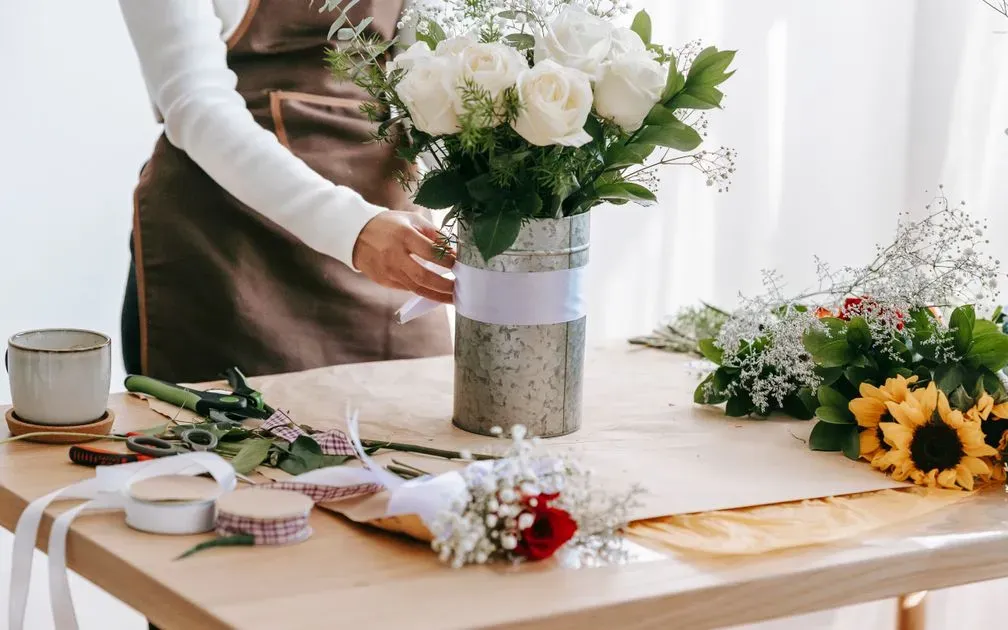
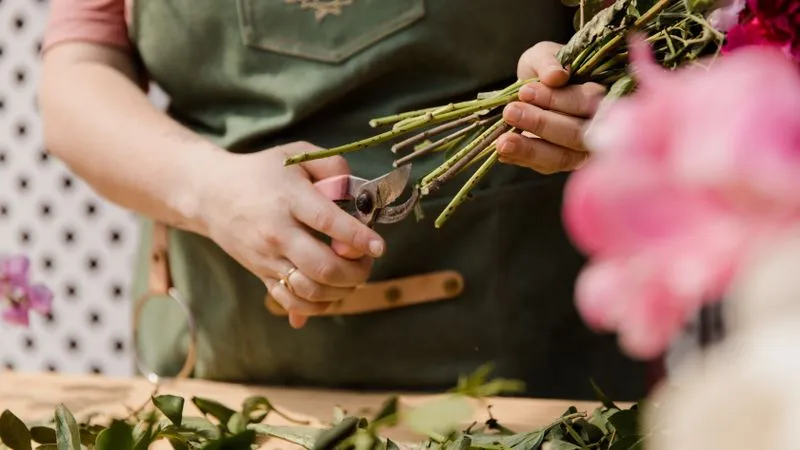
Labor is the heaviest of those jobs. Ellen Frost, a florist who teaches bouquet making on YouTube, calls preparation "the thing that actually takes the most amount of time." One person cleaning every stem alone should allow "at least two hours," she says, before any design work starts. Emily Summer, a Montana wedding planner, notes that a florist's processing makes sure "everything that they're bringing on site is a usable flower." With a wholesale box, that sorting falls to you.
"You do not want to be making your wedding bouquet as the first bouquet you've ever made, ever in your life."
Ellen Frost, florist, 2025
Frost suggests practicing "a couple weeks, even a month, even more" ahead. Summer thinks wholesale works best when the couple has helpers and someone close to them has worked with flowers.
The cooler line also comes with a schedule. Frost says wholesale flowers should arrive "at least 2 days before the wedding," and Summer says "ideally 2 days." Summer wants design done the day before, "not the morning of your wedding," because boxed flowers need conditioning, and if a shipment runs late, "there's really no backup option for you."
Our own guidance matches: have your flowers delivered about two days before the event. Our fresh flowers and greens ship by FedEx Priority Overnight, but delivery times vary by carrier and zip code and are not guaranteed, one more reason to build in the second day. Our unpacking guide asks you to recut the stems and let them drink at least 3 to 5 hours, ideally overnight, and at least 12 hours for roses, in a cool room out of direct sun. Frost, too, prefers a cool room with the lights off to a home refrigerator. Day one goes to hydration, the day before the wedding to design.
Set the formula beside a real flower list and a pattern appears. Summer says centerpieces account for most of a wedding's flowers, and the formula gives them the smallest labor share, so their price is mostly marked-up stems and containers. Bouquets and hand-wired pieces carry the largest labor share and need the most practiced hands. The biggest savings and the hardest work sit in different pieces.
Skipping the florist leaves the florist's work in place, packed into your home over the two days before the wedding. Much of what you save is the markup on stems plus the charge for that work, and you keep it by planning the work as carefully as a florist would.
Before you place the order
- Book delivery for about two days before the wedding. Use day one for unpacking and hydration and the day before for design, and keep the wedding morning free.
- Plan at least two hours for one person to clean every stem, then line up helpers, ideally including someone who has worked with flowers.
- Do the centerpieces yourself, since they hold most of the stems and their florist price is mostly marked-up materials. Decide early whether bouquets and hand-wired pieces go to a florist.
- Practice your bouquet weeks ahead, and write down a stem recipe for each centerpiece before you order.
- If a florist quotes part of the order, request an itemized quote so you can see how much is flowers and how much is design labor.
How we checked this
We used a florists' trade magazine's pricing guide, YouTube guidance from a florist and a wedding planner, and our own FAQ and unpacking guide. The delivery method, the two-day timing and the hydration times are ours. The markup method appears to date from about 2015, and the centerpiece and bouquet prices are the magazine's worked example, not a survey of what florists charge. The labor and timing advice comes from two practitioners and is not measured data. The magazine writes for florists, and its publisher also runs a flower business. We sell wholesale flowers to DIY couples, so we have a stake in this answer too. Still unknown: how many hours a typical DIY wedding takes and how much couples save once their own costs are counted. We found no survey that measured either.
- Florists' Review, wedding flower pricing formula guide, November 7, 2026.
- Ellen Frost, florist, YouTube video on preparing wedding flowers and bouquets, April 2025.
- Emily Summer, wedding planner, YouTube video on ordering bulk wholesale wedding flowers, March 2025.
- Blooms By The Box, wholesale flowers FAQ on shipping and delivery, checked November 17, 2026.
- Blooms By The Box, guide to unpacking and preparing fresh flowers, checked November 17, 2026.
So where should you buy your DIY wedding flowers in 2026?
Buy most of your stems from a wholesale seller that ships fresh flowers to your door, then fill small gaps locally and hand only your hardest pieces to a florist. Here is how the six options rank for a DIY wedding of 50 to 200 guests.
1. Blooms By The Box: best overall
We have sold fresh flowers and greens at wholesale prices since 2007, and anyone can order. Your flowers ship by FedEx Priority Overnight anywhere in the continental US, and your supplies can come in the same order. Free design consultations, flower recipes and tutorials help you plan every piece, and shipping is free on flower orders over $199.
2. Online wholesale flower retailers: best for selection delivered to your door
Other online wholesale sellers also ship bulk stems to the public. Before you order, compare three things: the order minimum, the shipping cutoff for your date, and what happens if a box arrives damaged.
3. Warehouse clubs: best for simple roses on a tight budget
A club can be the cheapest route for plain roses in one color. You need a membership, the selection is small, and nobody helps you plan the design.
4. Local wholesale flower markets: best if you live near one
A market lets you see every stem before you buy. Hours start early, public access varies from market to market, and some sell only by the full bunch, so call ahead before you drive over.
5. Grocery stores: best for last-minute filler
A grocery store works for a few extra bunches the week of the wedding. Quantities are limited and an exact shade is rarely promised, so keep it to greenery and filler, never your bridal bouquet.
6. A florist for a few key pieces: best for the piece you cannot practice
If one piece makes you nervous, such as the bridal bouquet or a large arch, a florist can make just that piece while you build the rest. Ask for a quote on those pieces alone.
Over the next year or two, I believe the couples who do best will treat their prep days as seriously as their stem price. Time is the budget line people forget. Plan one day to unpack and hydrate and the day before the wedding to design, and add a day if your piece list is long.
So choose your seller first. Then count your pieces honestly. Then build your prep days backward from the wedding date, with real helpers on the calendar.
Order early, give your stems time to drink, and save your energy for the best part: watching a room fill with flowers your own hands arranged.
Frequently Asked Questions
What else do people ask about buying wholesale wedding flowers?
Most questions come down to timing, prep and delivery: order weeks ahead, have flowers arrive about two days early, and hydrate every stem the moment the box opens.
How far ahead should I order wholesale wedding flowers?
Place your order 2 to 3 weeks before your delivery date. Waiting until under 2 weeks out risks some items being unavailable. You can order up to 120 days ahead, which helps if your heart is set on a seasonal flower.
When should my wedding flowers arrive?
Plan for delivery about 2 days before the event. That gives stems time to rehydrate and open. Wedding planners add one more rule: do your arranging the day before, never the morning of.
Do wholesale flowers arrive ready to arrange?
No, and that's normal. They need processing, which means removing brown or wilting petals, trimming stems to vase length and letting blooms open. A FloralDaily report on buying straight from the wholesale market put it plainly: lower prices come with "raw" stems you de-thorn, clean and cut yourself.
How do I care for the flowers when they arrive?
Unbox right away. Take off the sleeve, strip any leaves that would sit below the water line, recut each stem at least one inch at a 45 degree angle, and set it in lukewarm water. Let them drink 3 to 5 hours or overnight in a cool room. Roses need at least 12 hours.
Should I keep wedding flowers in the refrigerator?
Never. A home fridge is too cold for cut flowers. Use a cool, dark room instead, and drive them to the venue inside an air-conditioned car, not in a truck bed.
Is buying wholesale right for every couple?
Not always. It works best when you have willing helpers, someone with a little flower experience, and a venue you can reach early. You'll also choose from fewer stem types than a florist can source.
Where does Blooms By The Box deliver, and how do I get help?
Fresh flowers ship nationwide across the continental US by FedEx Priority Overnight, and supplies ship separately by FedEx Ground. For a free consultation or personal assistance for ordering, call our Customer Service Team at 1-855-BUY-BLOOMS.
Written by
Joan
Owner, Blooms By The Box
Joan Wyndrum is a co-founder of Blooms By The Box, an online destination for fresh wholesale flowers and floral supplies.
Connect on LinkedIn