
Quick Answer
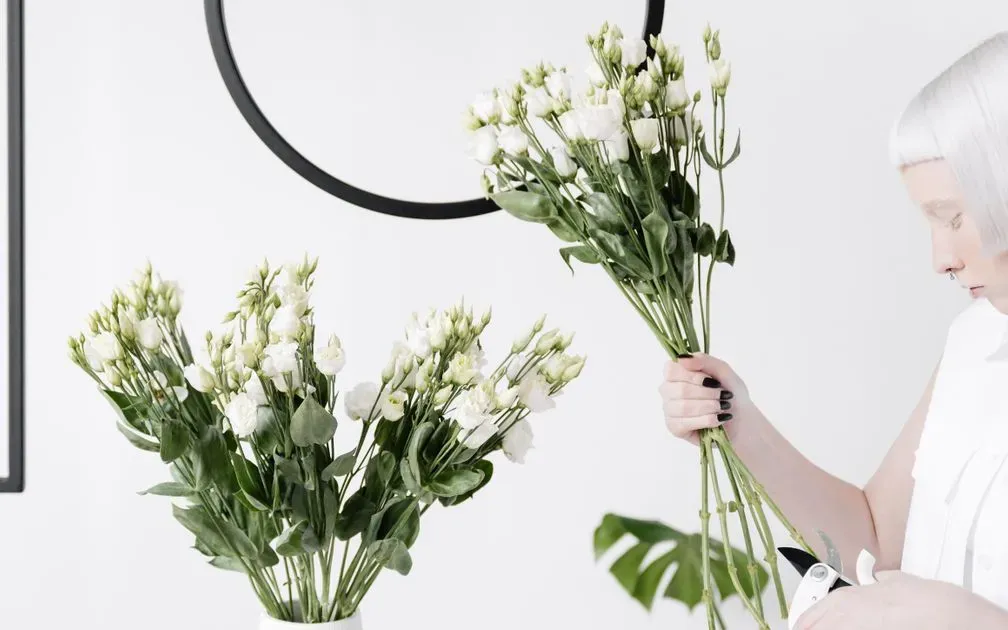
White lisianthus stays bruise-free when you follow three rules: give every bloom room, touch it as little as possible, and keep it cool and steady from delivery to the reception.
Its tea-rose petals show every press mark, and a bruise won't fade. Hold stems by the base, never the bloom. Heat or cold will damage fresh flowers. Pick a cool, draft-free spot out of direct sun before the box lands. And since field lisianthus blooms all at once on the weather's schedule, shipped stems are easier to time for a fixed wedding date.
Key Points
- Greenhouse grower Jay Vander Huen warns that lisianthus buds sitting at the same level in a bunch become easily marked, crushed or damaged without enough space.
- Blooms By The Box advises unboxing lisianthus as soon as it arrives, recutting the stems under water and storing them in a cool area away from direct sunlight and drafts.
- Blooms By The Box advises ordering 2 to 3 weeks before your delivery date, up to 120 days ahead, with flowers arriving about 2 days before the event.
White has been a lisianthus staple since the color range was just white, pink and purple, and it remains the shade where handling mistakes show first.
White is the classic wedding choice. What's shifting is everything around it. Growers have been leaning toward dusty, antique tones like muddy peach, champagne and rose pink, so white now shares grower attention with softer shades. It still gets every guest's attention at the reception. That's the catch.
Timing is the other catch. In a 2023 r/gardening thread, one grower said lisianthus all bloom at the same time and called bloom timing "super weather dependent," which makes a local crop hard to line up with a fixed wedding date. Once cut, though, lisianthus is a sturdy focal flower that lasts 5 to 7 days in the vase. For you, that means the flower's timing is rarely the real problem. The handling is.
Here's what this guide walks you through, in order:
- Why white bruises: how pressure, crowding and warmth mark pale petals before you ever pick up a stem.
- Three handling rules: plus one question to ask each time you reach for a white stem: will this move leave a mark I can't take back?
- Where to buy: how to source white lisianthus that arrives ready for a fixed date.
I'd start with the third rule tonight, before the box ever ships: pick a cool room away from sun and drafts and clear a shelf for your buckets.
Three handling rules keep white lisianthus from bruising: give every bloom room, touch it as little as possible, and keep it cool and steady, away from direct sun, drafts and heat.
Gentle fingers are only half of the job. Temperature does just as much to keep a white petal clean. Our flower care guide puts it simply. Let the stems drink at room temperature, out of direct sunlight. To slow the opening by a day or two, use cool (not cold) water in a cool, dark place. A warm porch or a cold one can undo a careful unpack.
Two plain definitions first. Lisianthus is a focal flower, meaning the star stem a design is built around, with layered petals that look like a classic tea rose. Bruising is the brown or creased mark left where one of those petals was pressed or rubbed. For example, a white bloom squeezed against its neighbor in a tight bucket can carry a tan crease all the way to the reception.
Here's the twist. Stems headed for long-distance shipping are usually harvested earlier, so many of the buds you unpack still have to open in your care. The good news is that a closed bud buys you time. I'd spend that time setting up the room, the cool spot and the light touch each bloom will need, starting with how far apart the stems sit.
Questions this article answers
Why does white lisianthus need such gentle handling?
Our white lisianthus comes 10 stems to a bunch, with 3 to 5 blooms on each stem. It needs gentle hands because white petals show every crease, press mark or brown spot.
Before your box arrives, run through these quick checks:
- Clear a cool spot: find a room with space for several buckets, none of them packed tight.
- Choose your helpers: one or two people should unpack and prep every stem.
- Plan your designs first: know where each stem goes, so you place it once.
Lisianthus is the soft, ruffled flower that looks a little like a rose, and a single stem carries more than most first-time buyers expect. Each stem holds several open blooms and tight buds, all sitting close together. That's the beauty of it. It's also the risk.
Here's what I mean by a bruise. A bruise is a spot where a petal was pressed or rubbed hard enough to damage it, so it later turns tan or brown. For example, a bloom squeezed against a bucket rim can brown along that exact edge. On a blush or lavender petal you might never notice. On white, the camera will.
That matters more for weddings than for almost any other order. Our wedding work has been featured on Style Me Pretty, Ruffled, and Wedding Chicks, and close-up wedding photos are a good reminder of what a lens catches: every petal edge, in sharp focus, right next to a white dress that hides nothing.
Wholesale pricing changes the job, too. Contrary to what many first-time buyers expect, bulk flowers don't arrive ready to drop into vases. They arrive fresh, but the last round of care happens in your hands, at your kitchen counter or in a venue back room, and that is where a lot of handling damage can be prevented. The more value you get at wholesale, the more the finishing care rests with you.
The good news? You don't need a florist's bench to get this right. If you're building a mix around white lisianthus, our wedding flower packs and curated collections pair it with other stems, and our guide to October wedding flowers ranked by vase life helps you choose companions by how long they last. Knowing the rules is one thing, though. Following them during a packed wedding week is another.
Why is bulk white lisianthus harder to keep flawless than a single bunch?
We've provided fresh flowers and greens since 2007. With white lisianthus, the friction is simple: buying in bulk saves money, yet every extra stem adds petals that can bruise.
- Volume: a bulk order brings many stems at once, and each one needs unpacking, trimming and a spot in water.
- Packing: stems ride close together in the box, and packed flowers are hard to cool.
- Touch: every sort, count or move gives a white petal one more chance to crease.
Buying in bulk is how most DIY weddings stay on budget. Our average wholesale price is $3 to $4 per stem for bulk wedding varieties, and that average is what makes a full box of fresh stems realistic for a wedding budget. Here's the catch. A lower price per stem only pays off when that stem reaches the table looking fresh, and a creased white bloom can't be smoothed back out once the mark shows up. Think of it as a trade: the savings are real, but they only count for the stems that make it through prep.
The research points the same way. A 2017 Oklahoma State University Extension fact sheet by Michael Schnelle and John Dole reported that plant tissue was at least 95% water and that any wilting shortened vase life. It also named the problem with boxes directly: "Once packed, flowers are difficult to adequately cool." That line matters for every bulk buyer. Your lisianthus spends its whole overnight trip packed. The care starts the moment you open the lid. Unbox it, recut the stems, then get them into water.
Its authors also flagged a habit that is easy to fall into: "While it is common to handle flowers dry and rehydrate them later, vase life generally suffers." Dry handling means moving flowers around out of water. For example, you might spread every stem across the kitchen counter so you can count and sort before a single bucket is filled.
- Before: you unbox everything, lay the stems out to sort by bloom size, and fill buckets last.
- After: buckets are filled first, and each bunch goes from box to water after one quick look.
The bigger the order, the longer stems tend to sit out of water. Bulk savings and bruise risk grow together. You'll want to keep in mind that this pull isn't unique to lisianthus. Any delicate flower bought in volume carries the same trade, including the airy filler in our guide to how much baby's breath you need.
Don't worry, though. Ordering fewer stems isn't the fix. Handling each one smarter is, starting with how much room every bloom gets in the bucket.
What actually marks white lisianthus petals between the box and the bouquet?
When a white lisianthus petal turns up creased or spotted, most people blame clumsy hands. The growers and extension specialists we read look first at space and temperature.
Where the marks come from, and the rule for each
- Crowding: give every stem room in the box, the bucket and the bouquet.
- Condensation: avoid big temperature swings, which leave water on the petals.
- Repeated handling: touch each stem only as often as the job requires.
Sources: a grower's 2024 care video and two university extension guides.
Jay Vander Huen has worked in cut flower greenhouse production for over 25 years. In an August 2024 care video from the greenhouse where he works, his first handling tip was about room. Lisianthus "especially need their space," he said. The stem explains why. Many flower buds sit at the same level in a bunch, with more lower down, and "if these flowers don't have enough space they will become easily marked crushed or damaged."
UMass Amherst Extension's floriculture program gives the same warning for cut flowers in general: "Avoid over-filling the containers with flowers to prevent bruising and tangling." A bulk order tempts you to fill the buckets you already have. The guidance says not to.
Some spots have nothing to do with pressure. Vander Huen calls lisianthus "sensitive to moisture." Take the flowers out of the cooler too quickly and condensation forms on the petals, which raises the risk of botrytis, a fungal rot. "When these flowers experience big swings in temperature there's a risk of moisture buildup on them causing further spotting or rotting," he said. Oklahoma State University Extension's 2017 fact sheet describes the same process for cut flowers generally: once water droplets form on flowers and foliage, "a common fungus known as botrytis may attack." A brown fleck that appears after the stems leave the cold may come from water, which gentler fingers cannot prevent.
Handling is the cause people expect, and the damage builds with every touch. Vander Huen put it plainly: "give them enough space and don't handle them more than necessary." UMass Extension explains why growers grade and bunch flowers right after harvest, before they go into water: doing it once "reduces handling steps and minimizes mechanical damages." On a wedding planning forum in 2024, one guest wrote that they always notice "bruising on the petals from the bouquet being picked up and set down over and over throughout the day," most of all in white or pale pink bouquets. The comment concerned bouquets in general and never named lisianthus. One guest cannot establish a pattern, but the final rounds of handling happen on the wedding day.
The causes are clear. For flowers at home, so is the temperature. Our care guide says to let the stems drink at room temperature, out of direct sunlight. Then keep them in a cool area. Cool is the goal, not cold. The outside sources below describe commercial coolers. They disagree with one another.
| Source | Temperature it gives | Where |
|---|---|---|
| Blooms By The Box care guide | Room temperature while the stems drink, then a cool area, not cold | Our flowers, at home |
| Oklahoma State University Extension, 2017 | 32 to 35°F | Commercial coolers, cut flowers generally |
| UMass Amherst Extension, undated | Close to 33°F for most flowers, 50°F for chilling-sensitive ones | Commercial coolers, by flower group |
| A seed retailer's grower guide, 2025 | 36 to 40°F | Grower coolers, lisianthus |
| Greenhouse grower's care video, 2024 | 8 to 10 °C | Grower coolers, lisianthus |
Oklahoma State warns that flowers kept at 41°F "may deteriorate up to four times faster" than those at 32°F. Vander Huen, speaking about lisianthus specifically, says they "don't need to be in the coldest part of the cooler." The outside sources do not settle it among themselves. They share one point with our guidance. A stem that swings from cold to warm is at risk. A steady temperature also guards against condensation.
A marked stem can usually still be used. The lower flowers on a lisianthus stem are the oldest, and Vander Huen says "sometimes it may be necessary to remove the oldest flowers if they are damaged" to get the most from a stem. Floralife, which makes postharvest treatments, advises buying stems with 1 to 3 blooms open and no leaf yellowing. At that stage, much of each stem is still in bud.
Read side by side, these sources describe a petal mark as an accumulation of small stresses: a bunch packed tightly into a bucket, a cold stem carried into a warm room, a bouquet lifted once more before photos. White petals show the sum. A few habits address every cause these sources name, even while the experts disagree about the thermostat.
- When the box arrives, unpack into enough buckets that buds on neighboring stems do not press together, and resist squeezing one more bunch into a full bucket.
- Avoid big temperature swings, such as a hot car or a cold porch. Keep the stems away from direct sun, drafts or heat sources.
- Sort and group stems once, then build, so each is handled as few times as possible. On the day, decide in advance where the bouquet will rest.
- Follow our care guide. Let the stems drink at room temperature for up to 12 hours. To slow the opening by a day or two, use cool (not cold) water in a cool, dark place.
- Before you discard a marked stem, check whether the damage sits on the lower, oldest blooms, and remove only those.
How we checked this
We drew on a greenhouse grower's 2024 lisianthus care video, two university extension guides, a seed retailer's grower guide, a postharvest product maker's buying advice and a wedding planning forum thread. Its advice for flowers at home follows our own flower care guide. The video relies on an automatic transcript, so we quoted only its clean wording. The extension temperature guidance covers cut flowers in general, and the forum comment is one guest's observation about bouquets in general. The seed retailer sells lisianthus seed, and Floralife sells the treatments it recommends. We sell white lisianthus, so we benefit when it arrives and stays in good condition. Still unknown: which of the three causes accounts for most petal marks, and the best cooler temperature for lisianthus specifically. None of our sources measured either.
- Jay Vander Huen, greenhouse grower's lisianthus care video, August 2024.
- Michael A. Schnelle and John M. Dole, Oklahoma State University Extension, fact sheet on cut flower care and handling, February 2017.
- UMass Amherst Extension, Greenhouse and Floriculture program, guide to harvesting and handling cut flowers, undated.
- Trailing Petunia, lisianthus cut flower grower guide, September 2025.
- Floralife, lisianthus care and handling post, November 2015.
- r/weddingplanning, forum thread on wedding flowers to avoid, June 2024.
- Blooms By The Box, flower care guide published on bloomsbythebox.com.
Is buying white lisianthus online the safer bet for a fixed wedding date?
Yes, for most fixed-date weddings, ordering white lisianthus online from a supplier with a proven review record is the safer path. Blooms By The Box averages 4.7/5 across 11,700+ verified reviews.
Buying local has real appeal. The stems are close, the grower is friendly, and it feels simple. The catch is the calendar. A 2024 thread on r/weddingplanning shows it plainly: a couple ordering budget-friendly flowers from a flower farm was told the final selection would depend on season and stock. That's an honest answer from a farm. It's a nerve-racking one when your whole palette is white.
So where does that leave you with a fixed Saturday and an all-white plan? A wedding date doesn't move, so your flower source shouldn't be a maybe. Lisianthus sits on our year-round availability list, which means your white order isn't waiting on a local field to bloom the same week you say your vows.
Proof matters, too, because you can't squeeze a stem through a screen. Our reviews come through Shopper Approved, and 75% of them are five-star. That isn't a promise about any single box. It's a pattern. When you can't touch the flowers before they arrive, a long pattern from real buyers is the closest thing you have to holding a stem in your hand.
Bruise-free white starts before the box is packed. One seed seller's growing guide recommends cutting lisianthus when one or two blooms are open and the rest are still in bud. Fewer open faces means fewer white petals pressing against each other on the way to you.
Waste is the other quiet cost. In that same thread, a commenter who works with a florist said baby's breath breaks easily, florists waste a lot of it getting a usable piece, and the bride still pays for the waste. Bruised lisianthus works the same way. Every creased bloom you pull is a stem you bought and can't use. If you're pairing lisianthus with airy filler, our guide on how much baby's breath you need helps you order for the pieces you'll actually build.
My advice when you place the order: check these three things before you click buy.
- Bloom stage: buds mixed with a few open blooms travel with fewer white faces touching.
- Track record: verified reviews from real buyers tell you more than one styled photo.
- Care steps: clear written instructions for unpacking and hydrating keep your first hour calm.
Once the box lands on your porch, the choosing is done and the handling begins, starting with how much room each white bloom gets in its bucket.
What will decide whether your white lisianthus stays bruise-free?
More and more, bruise-free white lisianthus will be decided before anyone builds a bouquet: by when stems are grown and cut, how they are packed, and how cool and steady they stay.
The growing side moves slowly. Farmer Bailey tells growers that lisianthus plugs take 12 weeks to grow, are grown to order, and should be ordered 4 or 5 months before planting. Growers also say the seed itself is hard to source. So a farm's white lisianthus is planned months before a single bloom opens. Once the stems are cut, the clock speeds up, and a few warm degrees can multiply how fast a bloom fades.
Here's where I'd put your energy. You can't change a farm's planting calendar, but you can control the last mile. Order from a source that ships on a schedule you can plan around, clear a cool spot before the box arrives, and give every white face its own air. Then lift your first stem by its base, not its bloom.
Summarize This Article With AI
Open this article in your preferred AI engine for an instant summary.
Frequently Asked Questions
What else do people ask about keeping white lisianthus bruise-free?
Most questions come down to timing, sourcing and what to do once a petal is marked. Each answer below gives you a step you can take right away.
When should I order white lisianthus for a wedding?
Order 2 to 3 weeks before your delivery date, and know that you can place it up to 120 days ahead. Plan for the flowers to arrive about 2 days before the event so they can rehydrate, meaning drink water back up after the trip, and open. Ordering under 2 weeks out risks some items being unavailable.
Can you fix a bruised lisianthus petal?
Not really. A pressed white petal keeps its mark. What you can do is gently remove a damaged outer petal or turn the bloom so the crease faces into the design. That's why prevention, with room, a light touch and a steady cool spot, does most of the work.
Why is white lisianthus hard to find from local farms?
Growing it takes planning. A farm starts from plugs, young seedlings raised in small cells and grown to order, and one grower on a cut-flower forum said lisianthus seed is hard to source at all. I love a good local farm, and I'd never talk anyone out of one they trust. The trade-off is certainty: a farm's white crop is set months before your date, while a wholesale order lets you pick your stems and request a delivery day.
Can other flowers mark white lisianthus in the bucket?
They can. Wedding-planning threads note that sunflowers from farmers markets or fresh flower fields can carry heavy yellow pollen. On white petals, yellow dust shows fast. Keep pollen-heavy stems in their own bucket and add them to your designs last.
Can white lisianthus be shipped to me?
Yes. Blooms By The Box ships premium fresh flowers nationwide, and you can order white lisianthus and your floral supplies online in one place. Once the box is home, open it right away in a cool, draft-free room out of direct sun.
Written by
Joan
Owner, Blooms By The Box
Joan Wyndrum is a co-founder of Blooms By The Box, an online destination for fresh wholesale flowers and floral supplies.
Connect on LinkedIn