Quick Answer
What's blooming in a garden barely limits what you can order. A buy calendar refers to what can ship for your delivery date, and it beats any bloom calendar for weddings.
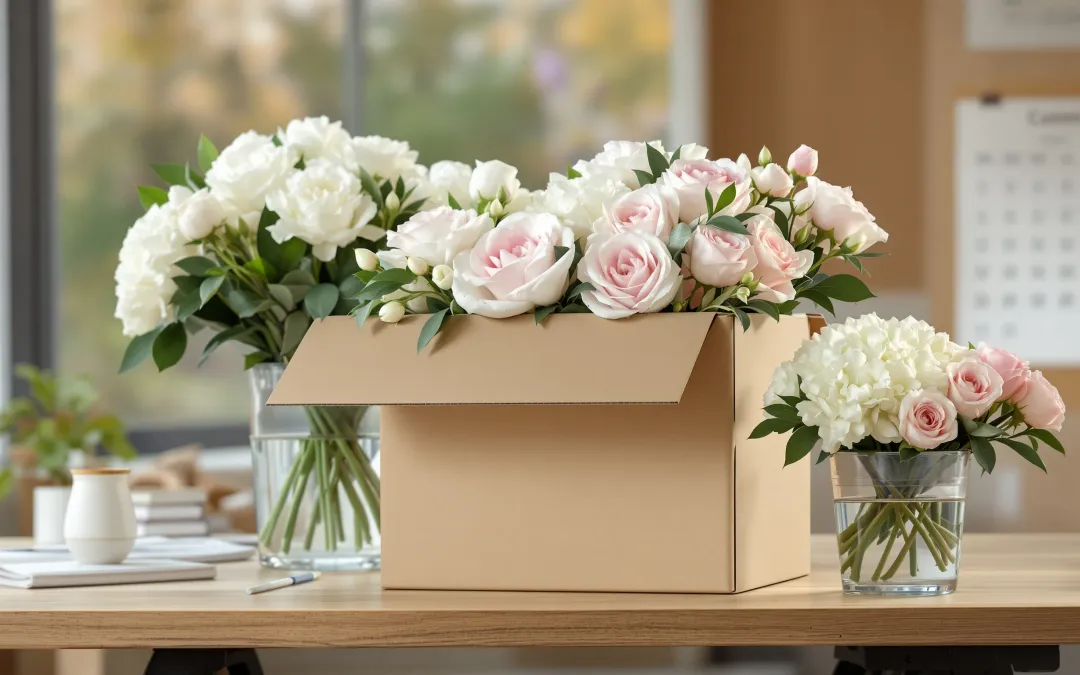
Here's why. Imported stems must be inspected by U.S. Customs and Border Protection at their first port of entry, then travel cold to your door. Farms and ports set your options, not your zone. Our product pages agree: about 84% of the fresh flowers Blooms By The Box lists are available in every month. Order 2 to 3 weeks before a delivery set 2 days ahead of your event.
Key Points
- About 84% of the fresh flowers on our product pages are listed in every month of the year, as of late September 2026.
- According to USDA APHIS, imported fresh cut flowers and greenery must be inspected by U.S. Customs and Border Protection at the first port of entry .
- Blooms By The Box advises ordering wedding flowers 2 to 3 weeks before delivery and planning delivery 2 days before the event .
Every imported stem has to clear a U.S. inspection before it can reach you, and inspectors have the final say. No garden chart shows that step, yet it shapes your order.
You probably already know the usual advice: choose flowers that are "in season." That advice was written for gardens. A box of wedding flowers answers to farms in several countries, a port of entry and a delivery date, not to the weather outside your window.
Our own product pages tell the same story. Calla lilies, carnations, hydrangeas and garden roses are listed in every month of the year, whatever the garden is doing.
Even my lily guide, a bloom calendar at heart, couldn't stop at bloom dates. Each lily type in it comes with seasonal pricing and wedding ordering lead times, too. That's the buy calendar quietly doing its job.
Imports bring their own rules as well. Some cut flowers and greenery face extra entry requirements, for example when they can be planted and grown. Your local bloom chart will never mention that.
So in this guide, I split the question in two. Here's what you'll walk away with:
- The two-calendar test: one quick check that tells you whether a flower's garden season even matters for your order.
- The three-bucket sort: year-round staples, relay flowers and local-only seasonals, plus what to check for each one.
- The count-back method: how to go from your delivery date to an order date 2 to 3 weeks earlier, step by step.
You don't need a garden to plan beautiful wedding flowers. You need a date.
The cut flowers you can order this week mostly grew far from your garden. Imported stems are inspected at the first U.S. port of entry, then kept cold to your door.
You've probably typed "what flowers are in season right now" and found a tidy chart sorted by spring, summer, fall and winter. I understand the appeal. Those charts describe gardens, though, and gardens aren't where most wedding flowers come from. In 2024, Americans bought over $7 billion worth of cut flowers, more than any other country, and those flowers moved through a supply chain that runs on its own clock.
So here's my answer, plainly: what's blooming outdoors barely limits what you can buy. Our own product pages point the same way, as you'll see below.
That's why I plan with two calendars. The bloom calendar tells you what is open outdoors in one place. The buy calendar tells you what can be ordered and delivered for your date. The garden still has a say, mostly on price and on local flowers. Even one flower family shifts by region: Asiatic lilies peak from late May through June in warmer zones 7 and 8, but not until late June or early July in cooler zones 3 and 4.
The good news? Once you separate the two, "what's in season" stops being a worry and becomes a simple lookup.
Questions this article answers
Top 3 questions this guide answers
- What is the difference between a bloom calendar and a buy calendar? One tracks a garden. The other tracks what can ship.
- Which flowers can you order in any month, and which still follow the seasons? Sort them into three buckets.
- How do you build a buy calendar for your wedding date? Count back from delivery day.
What is the difference between a bloom calendar and a buy calendar?
A bloom calendar shows what opens outdoors near you. A buy calendar shows what can ship for your date, which for most of our flowers means any month of the year.
You've probably seen the seasonal charts that sort flowers into spring, summer, fall and winter. Those charts aren't wrong. They just answer a different question than the one you're asking. An analysis of 16 sources shows the same gap again and again: garden bloom timing and cut-flower supply get blended into one list, even though they run on separate clocks. So I use a simple check I call the two-calendar test: is this flower blooming, and can it be delivered on my date?
What does a bloom calendar tell you?
A bloom calendar is a chart of when a flower opens outdoors in one place. Think of it as a diary of one garden. For example, a Zone 6b gardener in the Blue Ridge Mountains, at 3,300 feet, ran out of room on a paper bloom chart in 2024 because of an "unseasonably warm November." Same yard, same plants, and the calendar still moved.
Home gardeners who track bloom dates also point out that timing varies within a single species. That's why they record the cultivar, meaning the specific named variety, right alongside the flower. You'll want to keep in mind that a bloom calendar describes one place in one year, which is worth remembering when you fall for garden wedding flowers you saw growing nearby.
What does a buy calendar tell you?
A buy calendar is a chart of when a cut flower can actually be ordered, priced and delivered for a specific date. Farms and greenhouses around the world set it, not your backyard. 80% of the cut flowers US consumers buy are imported, and most of the domestic 20% is grown in California.
According to The Cut Flower Podcast, UK grower Roz Chandler said in 2022 that wholesalers there sold imported product "100%," even while local growers were "growing probably 11 months of the year now." Two calendars ran side by side in one country.
Imports also add a checkpoint a garden chart never shows. According to USDA APHIS, fresh cut flowers and greenery must be presented to U.S. Customs and Border Protection at the first port of entry for inspection, and entry can be refused if pests or diseases turn up.
Why do the two calendars drift apart?
"In season" and "available" are not the same thing. A flower can be finished for the year in your garden while it's arriving fresh from a farm somewhere else. Garden roses are a good example: we list them in every month, while a backyard rose bush rests through the winter.
| Question | Bloom calendar | Buy calendar |
|---|---|---|
| What it answers | What is open outdoors here this month? | What can arrive on my delivery date? |
| What sets it | Zone, elevation, weather, cultivar | Growing regions, greenhouses, cold storage, delivery dates |
| How local it is | One garden or one region | Farms across several countries and US states |
| What makes it shift | Weather, year to year | Which region is harvesting, plus holiday demand |
| Best use | Local and farm-direct flowers | Ordering bulk wedding flowers for a fixed date |
Here's how the switch looks in real planning. Before: "My wedding is in October, so my favorite spring flower is out." After: "My delivery date is in October, so let me check which stems can ship that week." In practice, the garden month sets the mood. The buy calendar sets the order.
The takeaway: use a bloom calendar for inspiration and a buy calendar for decisions. That one habit keeps you from crossing off flowers you could easily have, including many popular wedding flowers that people assume are out of season.
Which flowers can you order in any month, and which still follow the seasons?
Wedding flowers sort into three buckets: year-round staples, relay flowers that travel between growing regions, and local-only seasonals. Only the last bucket truly follows your garden.
I call this the three-bucket sort. Put every flower on your wish list into a bucket before you look at a single price. Each bucket tells you something different to check, so the bucket, not the month, tells you how much to worry.
Which flowers are year-round staples?
A year-round staple is a flower grown on a schedule, on farms or in greenhouses, so cut stems are ready week after week. Roses, carnations and hydrangeas are the classic examples. A wholesale operations chief in Orange County, California, described rose, carnation and hydrangea farms "timing themselves out perfectly" to have flowers to cut "every single day of the year."
According to our own lily guide, calla lilies belong here too. They "grow in greenhouse conditions year-round and are available at a consistent price regardless of the calendar month." For example, a December wedding and a July wedding can both use fresh callas.
What are relay flowers?
A relay flower is one you can order for many months because the harvest passes from one growing region to the next, like a baton. Peonies are the best example I know. A California grower described a year-round peony rotation that runs from Chile to Israel, then Arkansas and North Carolina, then Oregon and Washington, then Alaska, with prices that "fluctuate based upon where they're being produced." That same Orange County wholesaler called 2025 its "first year to ever have peonies year round." At Blooms By The Box, we list peonies from March through July, plus one December option, so check your month before you fall for them.
Here's the catch. A relay flower can be orderable for your date and still swing in price, depending on which region is supplying it. Every imported stem also has to clear inspection, and according to USDA APHIS, some cut flowers and greenery must meet additional entry requirements if they are edible, can be planted and grown, or come from endangered or protected species. In practice, give every relay flower a backup.
I wrote in my lily guide that couples who start with the bloom calendar instead of the mood board "almost never face last-minute substitutions." That advice still holds for this bucket: know a relay flower's months before you build your design around it.
Which flowers still follow the garden?
A local-only seasonal is a flower whose supply comes mainly from nearby growers during their outdoor season. Stems from a nearby flower farm are the clearest case: when the farm's season ends, so does the supply. For this bucket, the bloom calendar is your buy calendar. A wildflower look is a different story, since most of our wildflower packs are listed in every month.
| Bucket | What it means | Examples | What to check |
|---|---|---|---|
| Year-round staples | Grown on a schedule or in greenhouses for steady supply | Roses, carnations, hydrangeas, calla lilies | Holiday price weeks and your delivery date |
| Relay flowers | Harvest moves between regions, so supply stretches across months | Peonies | Our listed months, price swings and a backup flower |
| Local-only seasonals | Tied to one area's outdoor bloom season | Stems from a nearby flower farm | The bloom calendar where they're grown |
You might be wondering which bucket a flower in our catalog falls into. You don't have to guess. Here's when we list popular wedding flowers, based on our product pages in late September 2026:
| Flower | Months we list it |
|---|---|
| Roses, garden roses and spray roses | Every month |
| Hydrangeas, carnations and calla lilies | Every month |
| Ranunculus, lisianthus and lilies | Every month |
| Baby's breath and alstroemeria | Every month |
| Anemones | Every month, with the most choices February to May |
| Sunflowers | Every month, with the most choices July to October |
| Tulips | November to May |
| Peonies | March to July, plus one December option |
| Dahlias | May to September |
Each product page lists the months for that flower, so check anything else on your list against your delivery month.
The good news is that the sort is quick. Once each flower has a bucket, you know exactly where your planning attention belongs.
Do seasons still matter when you order wedding flowers?
Seasonal charts make it look simple: pick the month, see what grows, choose from the list. Follow one imported rose from farm to wedding table, though, and the calendar starts to mean something different.
Start with a single rose. On the Freakonomics podcast in late 2025, a California grower walked through the trip a rose makes from a South American farm to a West Coast wholesaler. Harvest, a day of hydration, a flight out, a landing in Miami, then days on a refrigerated truck. Every step adds time.
By the time a wholesaler receives it, the rose was "harvested nine to 10 days ago," the grower said, and "it could be two weeks old by the time a customer can get it." So the old question was whether a flower is in season. A better one now is how long it has been traveling.
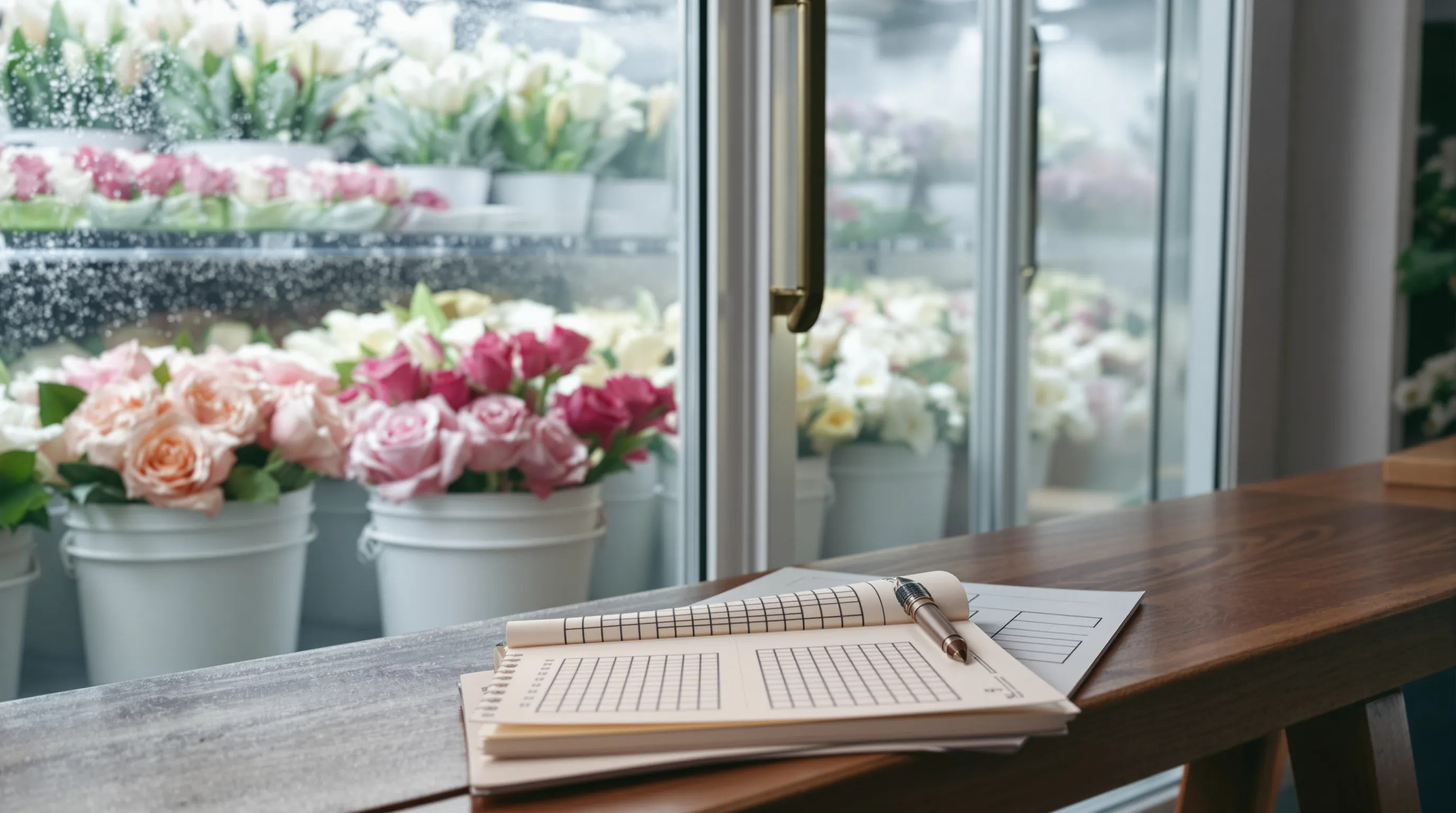
The route makes the difference. Flying directly into Los Angeles has "carved out five, six days," the grower said. An Orange County wholesaler on the same episode buys at the Dutch flower auction on a Thursday and has the flowers in its warehouse by Sunday morning, a "two-and-a-half-day turnover." Cold does the rest. The wholesaler keeps stems at "a consistent 42-degree coldness" from cutting to delivery, and once out of the cold they last "a week or two weeks depending on the product."
Costs keep a calendar too. Growers plan their year around a handful of holidays. "Forty-five percent of the overall revenue for flower growers is generated in the first quarter through Mother's Day," the grower said, and at the holidays the air freight that carries imported stems goes up by "a 75-cent increase on our kilo rate."
And some flowers still keep their own season, even for a national wholesaler like us. Carnations, calla lilies and alstroemeria are listed on our product pages in every month. Dahlias are not.
Our year-round flowers shift as well. We list anemones in every month, but with 13 choices from February through May and 7 in July, September and October.
So the season did not disappear. It moved. For most wedding staples, the calendar now matters less for whether you can buy a flower, and more for how fresh it is, what it costs to bring in, and whether a few favorites are available at all.
Before you order:
- Ask any supplier, us included, how many days the stems have traveled and how they were kept cold.
- If dahlias are non-negotiable, plan a wedding date from May through September. Otherwise, choose a backup flower now.
- Planning near Valentine's Day or Mother's Day? Price your flowers early, and ask whether holiday demand changes availability or shipping costs.
- Our standard deliveries arrive Tuesday through Friday, and Saturday delivery costs $20 extra where it's available, so a weekend wedding usually works best with a Thursday or Friday delivery.
How we checked this
We read a podcast interview with a California grower and an Orange County wholesaler, and checked the months listed on our own product pages and our delivery schedule in late September 2026. Our product pages show the months we list each flower, not what sells. We sell flowers in every month, so we have a stake in this answer. Still unknown: how early the busiest wedding weeks fill on our own delivery calendar.
- Freakonomics podcast episode on cut flowers, December 2025.
- Blooms By The Box product pages and delivery FAQ, checked late September 2026.
How do you build a buy calendar for your wedding date?
Start with your delivery date, count back 2 to 3 weeks to your order date, then sort flowers by bucket, price week and backup. The garden month barely enters into it.
You already know your wedding date, so you already have the most important input. I call what follows the count-back method, because every step starts from the day the box arrives and works backward.
What are the steps in the count-back method?
- Set your delivery date first: Plan for delivery 2 days before the event, as our FAQ advises, so buds get 24 to 48 hours to open fully. For a Saturday wedding, that means a Thursday delivery.
- Count back to your order date: Order 2 to 3 weeks before the delivery date, or as early as 120 days ahead. With less than 2 weeks to go, some flowers may be unavailable, so put your order date on the calendar in ink.
- Sort your wish list into buckets: Year-round staples need the least worry. Relay flowers need a price check and a backup. Local-only seasonals need a bloom calendar from where they grow.
- Check the price weeks: Growers describe Valentine's Day and Mother's Day as "5x-ing the overall daily consumption of flowers," and air freight rates climb at the holidays. If your date sits near either one, build a little extra room into your budget. Our average wholesale price for bulk wedding varieties is $3 to $4 per stem, but price the actual items you plan to buy instead of guessing.
- Name a backup for every relay flower: According to USDA APHIS, U.S. inspectors have the final say on whether plant products can enter the country. Pick a second-choice flower in the same color so one held shipment never derails your design.
- Turn table counts into bunches: Most of our bunches hold 10 to 25 stems, and each product page lists the exact count, so work out your order from your table count rather than guessing.
If budget is your main worry, you're in good company. Popular budget wedding guides point DIY couples to wholesalers "where you can order flowers in bulk," and some couples on budget forums place a small test-run order before the wedding. In practice, a test run on a year-round staple shows you how stems arrive and open.
What does the count-back method look like in real life?
Before: "Peonies bloom in June where I live, so I'll order them the week of my June wedding." That plan leans on the garden and leaves no time for buds to open.
After: "My wedding is on a Saturday in June. Delivery is Thursday. My order goes in 2 to 3 weeks before Thursday, with peonies as my first choice and blush garden roses as my backup." Same flowers, calmer week.
Ordering at the last minute doesn't get you fresher flowers. Wholesale stems arrive as closed buds and need time in water to open, which is exactly why delivery comes before the event.
Delivery dates can fill up, too. One shopper ordering months ahead for an October wedding found the entire week before the wedding greyed out on a big-box store's online flower calendar. So secure your delivery date early, then fine-tune the flowers.
Where can you order wholesale flowers for a last-minute wedding or event?
You can still order online, and the count-back method still works on a tighter clock. Order the day you know your date, lean on year-round staples first, and keep the same Thursday-for-Saturday delivery rhythm so the flowers can open. Our wedding flower packs and curated collections can also save you from building a recipe stem by stem when time is short.
You've got this. Put one date on the calendar, and every other decision gets easier.
Which calendar should you trust when you plan wedding flowers?
Trust the buy calendar for decisions and the bloom calendar for ideas. About 84% of the fresh flowers we list are available in every month, while gardens follow the weather.
Here's what I take from that. The garden will keep losing its grip on what you can order. It will still nudge price, and it still rules local flowers.
So the bloom calendar still earns its place. According to my lily guide, lilies open in three bloom waves, and I still read a chart like that for timing and mood. Local flowers keep their own rhythm, too. For stems grown close to home, the garden and the order form line up.
Everything else starts with one simple move. Write your delivery date at the top of your list. Count back 2 to 3 weeks and circle your order date. Then check every flower against that circle, not against the view outside your window.
Frequently Asked Questions
What do couples ask most about flowers in season?
Most questions come back to one idea: check what can ship for your delivery date, not what's blooming outside. Here are straight answers to the ones that come up most.
What flowers are in season right now?
Outdoors, it depends on your zone, your elevation and that year's weather. For a wedding order, I'd ask a sharper question: what can ship for my delivery date? That's the job of a buy calendar, a chart of what can be ordered, priced and delivered for one specific date.
Can I get peonies outside of spring?
Partly. We list peonies from March through July, plus one December option. Peonies are a relay flower, meaning the harvest passes from one growing region to the next, so price can swing with the region doing the growing. Outside those months, choose a backup in the same color, such as garden roses, which we list in every month.
How far ahead should I order my wedding flowers?
Order 2 to 3 weeks before your delivery date, and plan delivery 2 days before the event. Those two days matter. Buds need time in water to open, so a Thursday delivery suits a Saturday wedding.
Are calla lilies available all year?
Yes, callas are one of the easiest year-round staples. They grow in greenhouse conditions, keep a consistent price whatever the month, and we list them in every month. That makes them a calm choice while the rest of your list is still changing.
Can I buy wholesale flowers for my own DIY wedding?
Yes. Blooms By The Box serves DIY designers alongside professional florists and planners, with small order quantities and floral supplies in the same order. Budget wedding guides point DIY couples to wholesalers where they can order flowers in bulk, and a buy calendar simply helps you time that order.
Does a bloom calendar still matter for my wedding?
Yes, just for different jobs. It's great for mood, for flowers from nearby farms, and for spotting when a relay flower may cost more. I'd just never let it cross a flower off your list before you've checked your delivery date.
Written by
Joan
Owner, Blooms By The Box
Joan Wyndrum is a co-founder of Blooms By The Box, an online destination for fresh wholesale flowers and floral supplies.
Connect on LinkedInSummarize This Article With AI
Open this article in your preferred AI engine for an instant summary.