Quick Answer
What Are the Best Budget-Friendly Wedding Centerpiece Flowers?
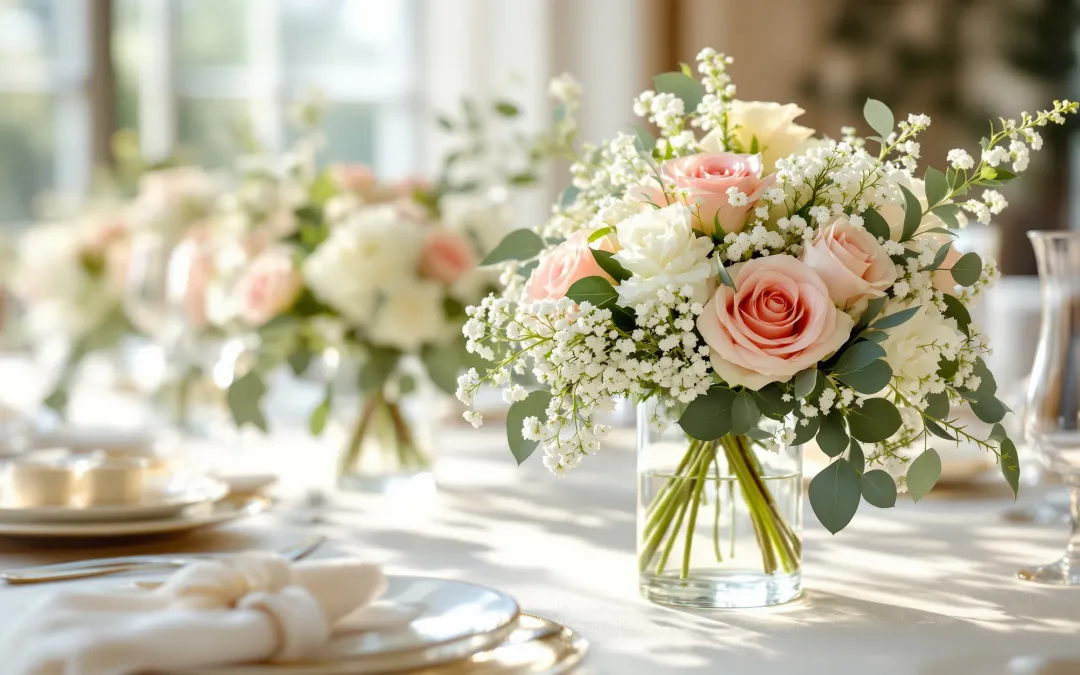
Budget-friendly wedding centerpiece flowers refers to stems priced well below premium varieties at wholesale. The top five are carnations, spray roses, alstroemeria, chrysanthemums, and baby's breath. Blooms By The Box ships all five in bulk. Choosing in-season varieties and pairing them with eucalyptus or ruscus keeps per-table costs low without sacrificing elegance.
You already know that wedding flowers add up fast. What most DIY brides discover too late is that the gap between an elegant centerpiece and an expensive one is almost entirely about which five flowers you choose and how you arrange them.
This guide covers exactly those decisions. You will find the five most cost-effective focal flowers available at wholesale, with per-stem price ranges and the visual impact each delivers. You will also find a complete centerpiece recipe, a before-and-after cost comparison showing what changes when you order bulk instead of booking a florist, and a seasonal bloom calendar to match your stem selection to your wedding date. The "three-bucket check" framework for stems, greenery, and containers gives you a clear planning sequence before you order a single bunch.
According to Ruffled, couples who set a clear per-table stem budget before choosing varieties consistently produce centerpieces that feel as considered as studio designs. Blooms By The Box carries all five focal flowers covered here, plus eucalyptus, Italian ruscus, and waxflower, in bulk and shipped fresh. Botanical PaperWorks recommends building your variety selection around what is naturally blooming on your wedding date for the freshest results at the lowest price.
The guide covers what to avoid, too. A few flowers that look beautiful in photos create real problems for DIY arrangers working on a budget. You will know exactly what they are, and what to use instead.
Flowers typically account for roughly 10 percent of a total wedding budget, making centerpieces one of the highest-impact line items a couple can cut without affecting how the reception actually looks. Carnations, spray roses, alstroemeria, chrysanthemums, and Queen Anne's lace are the five most cost-effective focal flowers available at wholesale pricing for DIY centerpieces.
You already know what elegant wedding centerpieces look like. What trips most first-time DIY brides up is not the flower selection - it is the stem count, the greenery ratio, and knowing which varieties hold up through a full reception without drooping. Order too few stems and the arrangements look sparse. Order the wrong flowers and you spend the night worrying about how the tables look instead of enjoying the reception.
According to A Practical Wedding's wedding flower guide, the most practical first step for a DIY bride planning centerpieces is setting a per-table stem target before selecting any specific variety. Starting with total tables multiplied by target stems per table gives you a firm order size to shop against, rather than guessing from a mood board and hoping the quantities work out.
Questions this article answers
Most brides researching budget centerpieces ask these three questions first. Here is where this article answers each one:
How Much Do Wedding Centerpiece Flowers Actually Cost Per Table?
Plan on $30 to $75 per table when you order bulk flowers online and arrange them yourself, compared to $125 to $300 per table through a full-service florist studio.
A comparison of 16 sources on budget wedding centerpieces shows a consistent pattern: the price gap between a florist quote and a DIY bulk order is driven mostly by labor, studio minimums, and markup, not by the flowers themselves. According to A Practical Wedding, real couples outside major cities have received florist quotes near $1,500 for their full floral package while spending roughly $600 total by ordering directly from a wholesale flower source. That is a savings of more than 60 percent on the same wedding. The takeaway: the stems are rarely the expensive part.
At Blooms By The Box, we have been shipping fresh wholesale flowers to DIY brides, event planners, and professional florists since 2007. The most consistent surprise new customers mention is not flower cost. It is stem count. A centerpiece that looks full and polished needs more stems than most brides expect, which is why starting with a per-table budget and a target stem count beats starting with a wish list of specific flowers.
Before you shop, use what I think of as the three-bucket check. Bucket one is stems, meaning the focal flowers. Bucket two is greenery and filler, which is the most underestimated line in nearly every DIY order. Bucket three is containers, foam, tape, and tools. Couples who price only bucket one almost always overspend on buckets two and three without realizing it until the order arrives. In practice, mapping all three buckets before you place a single order is the single most effective way to keep your total on target.
Contrary to popular belief, the flower variety is not what makes a centerpiece look expensive. Structure and volume are. A 20-stem arrangement built around carnations at roughly $1.00 to $1.50 per stem and finished with eucalyptus can read as polished and intentional as a studio design costing three times as much. The reality is that stem count and greenery do more visual work than any premium bloom upgrade.
According to Martha Stewart Weddings, greenery garland at roughly $20 per foot can reframe an entire tablescape, making modest centerpiece flowers look deliberate and considered. What this means for your budget is a clear trade: spend a little more on greenery, scale back on the premium blooms, and your tables will look fuller for less.
Which Budget Flowers Look Most Elegant in Wedding Centerpieces?
Spray roses, alstroemeria, chrysanthemums, waxflower, and baby's breath each deliver more visual volume per dollar than premium blooms at twice the price.
From what I have seen working with DIY brides, the ones who feel most confident are the ones who start with a recipe - a set stem count by flower type - rather than a mood board and a vague wish list. Our curated DIY wedding flower packs pair focal flowers with coordinated greenery and fillers so you get a complete per-table recipe rather than a list of individual stems to guess at. Starting with a recipe also makes it easier to compare prices across flower types before you place an order.
Spray roses are the clearest budget-to-elegance trade available. At roughly $1.50 to $2.00 per stem at wholesale, each branch carries four to seven individual blooms, so your stem count goes much further than it looks on paper. According to A Practical Wedding, spray roses are the go-to recommendation for DIY brides building affordable bouquets precisely because they deliver the full garden-rose look at a fraction of the garden-rose cost. The takeaway: spray roses are the most affordable path to a lush, garden-style centerpiece.
Baby's breath earns more credit than it usually gets. According to Brides.com, baby's breath used as the primary flower rather than a filler is one of the strongest budget moves in contemporary wedding design. A cloud of baby's breath in a low bud vase or a tall cylinder is genuinely striking when it is styled as the statement, not the backdrop. In practice, a single bunch can fill one entire centerpiece on its own.
Here is how the five best budget centerpiece flowers compare at typical wholesale pricing:
| Flower | Approx. Wholesale Cost | Blooms per Stem | Best Use in Centerpiece |
|---|---|---|---|
| Spray Roses | $1.50 - $2.00/stem | 4 - 7 mini blooms | Focal flower, garden-style look |
| Alstroemeria | $0.80 - $1.20/stem | 6 - 12 flower heads | Volume builder, long vase life |
| Chrysanthemums | $0.60 - $1.00/stem | 1 large or many small | Bold focal, available in many colors |
| Waxflower | $0.50 - $0.80/stem | Many small blooms | Delicate texture filler, long-lasting |
| Baby's Breath | $0.40 - $0.70/stem | Many tiny blooms | Statement cloud or filler |
All five are year-round staples. You are not competing with peak-season demand or paying import premiums for blooms that grow for only a few weeks a year. Building your centerpiece around at least two of these flowers plus a greenery layer hits a sweet spot of visual fullness at a per-table cost most budgets can handle comfortably.
How Do You Put Together a Budget Wedding Centerpiece?
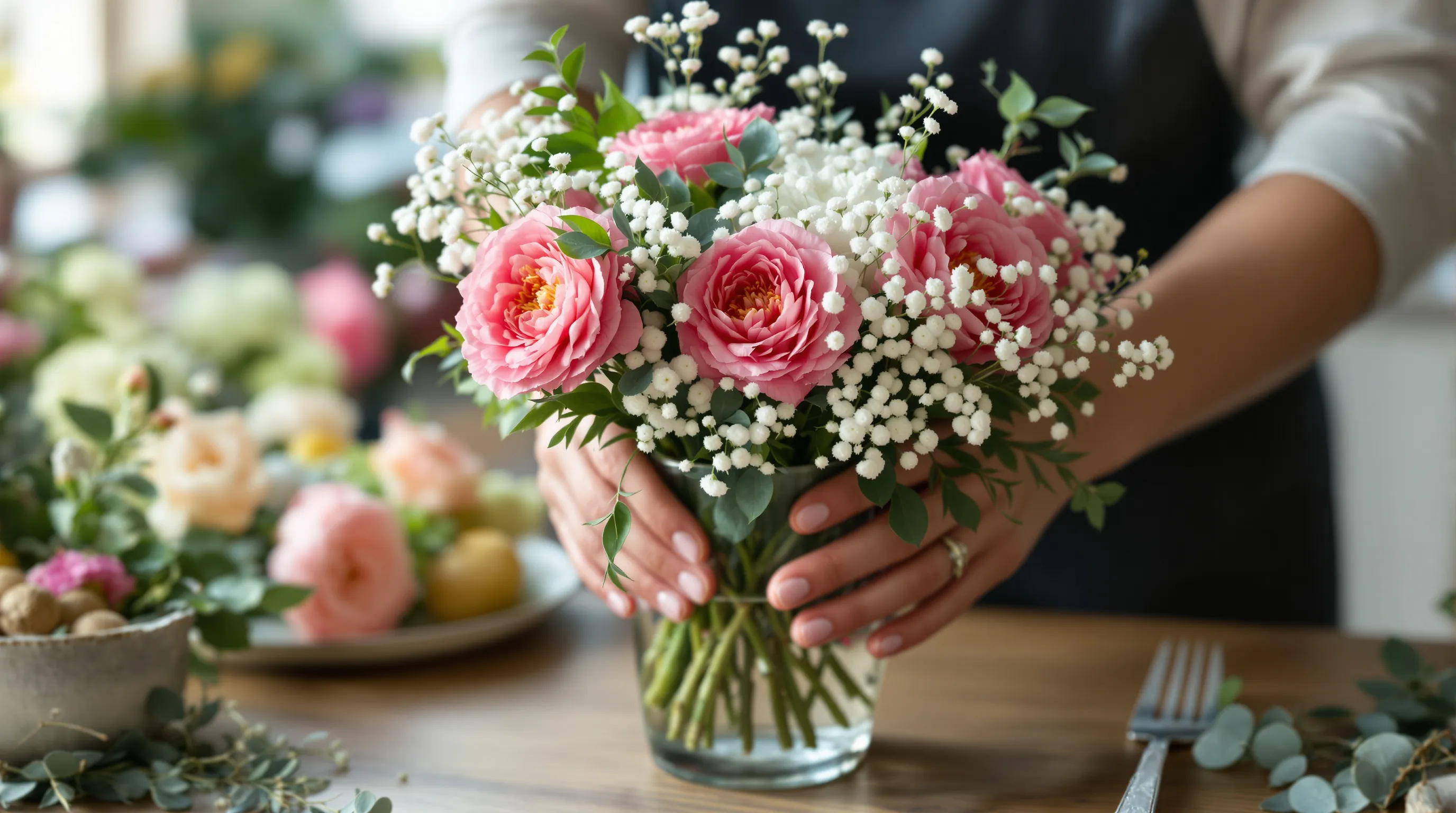
Start with the container, add greenery as your foundation layer, then place focal stems, and finish with accent flowers. That layering order is forgiving from the first try.
I think of it as four steps: container, greenery, focal flowers, accents. For a tall cylinder, pack eucalyptus branches in first so they anchor everything above. Add spray roses or alstroemeria stems at different heights for depth. Baby's breath or waxflower goes in last, tucked between the focal blooms to fill any gaps. According to Ruffled, setting a clear per-table stem count before you start keeps the finished arrangement from looking crowded.
The good news is that carnations, alstroemeria, and spray roses hold their shape, stay hydrated, and do not wilt under fluorescent light while you work. That makes them ideal for a DIY bride arranging flowers the morning before the ceremony.
What In-Season Wedding Flowers Save the Most Money on Centerpieces?
Choosing flowers at their seasonal peak gives you the freshest blooms at the lowest cost, and our seasonal wedding flower selection is built specifically around this principle.
Flowers grown in the right climate at the right time of year arrive with a better bloom-to-bud ratio, last longer after delivery, and cost less than the same flower imported out of season. In my experience, two couples with identical budgets can end up with very different centerpieces depending on how closely their wedding date lines up with their flower choices. The in-season version is almost always the better deal.
According to Botanical PaperWorks, planning your flower selections around what is naturally blooming near your wedding date is one of the most practical cost-saving steps a DIY bride can take. Common wedding favorites like tulips, ranunculus, and sweet peas have a defined window of abundance that keeps prices low, and ordering outside that window often means paying premiums for air-freighted imports. What this means for your shopping list is straightforward: let your date guide your flower choices, not the other way around.
Here is a quick seasonal guide to the most budget-friendly centerpiece flowers by time of year:
- Spring (March - May): Tulips, ranunculus, sweet peas, and lisianthus. Tulips are particularly abundant and affordable in early spring, often as low as $0.50 to $1.00 per stem at wholesale. Ranunculus gives a layered, lush look similar to garden roses at a fraction of the price.
- Summer (June - August): Sunflowers, zinnias, and lisianthus hit their lowest price point in summer. A sunflower arrangement reads as warm and full with far fewer stems than almost any other focal flower.
- Fall (September - November): Chrysanthemums, marigolds, and dahlias are plentiful and affordable. Fall mums are among the most affordable focal flowers available at any point in the year.
- Winter (December - February): Amaryllis, anemones, and carnations thrive in cooler growing conditions. Carnations do especially well in winter, which makes this season a particularly good time to build centerpieces around them.
According to Ruffled, baby's breath is one flower that effectively transcends seasonal pricing because it is cultivated in controlled environments and available year-round at consistently low wholesale prices. The takeaway: baby's breath and carnations are your budget anchors no matter what month you marry.
Match your focal flowers to your season, lock in your anchors, and let the calendar help carry some of the cost-saving work. You will get better flowers for less.
Sample Centerpiece Recipe: Budget Blush (20 Stems, Approx. $22 Per Table)
- 8 stems spray roses (blush or peach)
- 5 stems alstroemeria (white or ivory)
- 4 stems eucalyptus or Italian ruscus
- 3 stems waxflower or baby's breath
For 15 tables: order 10 bunches of spray roses, 8 bunches of alstroemeria, and 5 bunches of greenery. Total estimated cost: $300 to $380.
Which Flowers Should You Avoid on a Tight Wedding Centerpiece Budget?
Tulips as a solo focal flower, hydrangeas as centerpiece anchors, and orchids in bulk are the three types most likely to disappoint a DIY bride working with a tight budget.
With more than 1,400 fresh flower varieties available to order online, the temptation is real to choose based on looks alone. In my experience, a few flower types consistently create unexpected problems for first-time DIY arrangers, and knowing which ones to skip can save you both money and stress on a day when you have no margin for either.
Hydrangeas are the most common source of frustration. Each stem looks full and lush in photos, but a single hydrangea head drinks an enormous amount of water and needs careful conditioning to stay upright through a multi-hour reception. Without professional cooling equipment and a full day of hydration in advance, centerpieces built primarily around hydrangeas can look wilted before your guests finish appetizers. The takeaway: if hydrangeas appeal to you, use them as accent stems alongside a hardier focal flower rather than as the centerpiece anchor.
Tulips carry a different problem. They are genuinely affordable in spring, but they continue growing after they are cut, sometimes dramatically. The neat arrangement you build on Friday can look dramatically different by Saturday evening. In practice, tulips work better as supporting stems mixed with firmer flowers than as the sole focal bloom.
According to Fiore Designs, a wedding-focused floral studio, orchids purchased in volume for DIY centerpieces often look sparser than expected because the blooms are widely spaced on the stem. For brides who need visual fullness and density for the money, orchids rarely deliver at the price point where they make budget sense. What this means: save orchids for personal flowers like boutonnieres where a single stem carries the full effect.
According to Bridal Guide, flowers that are out of their natural season are also a hidden budget trap. An out-of-season flower often costs two to three times its peak-season wholesale price because it is being flown in from a climate where it is currently in bloom. The reality is that choosing the right flower for the wrong time of year is one of the easiest DIY budget mistakes to make.
Stick with the workhorses: spray roses, carnations, alstroemeria, mums, and waxflower. These are dependable, hardy, and consistently affordable.
What Changes When You Order Bulk Flowers Online Instead of Hiring a Florist?
Ordering directly replaces labor and markup with your own time, and the difference in total cost is usually significant enough to matter on a wedding budget.
A bride hires a local florist for garden-rose centerpieces. She is quoted $150 per table, bringing total centerpiece cost to $2,250. The flowers are beautiful but leave little budget for personal flowers or ceremony decor.
The same bride orders spray roses, alstroemeria, and eucalyptus in bulk. Her total for 15 tables runs under $500. She uses the savings for bouquets, ceremony arch flowers, and a floral consultation to confirm her recipe.
How Can You Make Budget Wedding Flowers Look More Expensive in a Centerpiece?
Tall containers, tight clustering, and greenery as the dominant visual layer are the three moves that close most of the gap between a budget arrangement and a studio centerpiece.
Our wedding flower bundles are designed around exactly this principle: a focal flower, a complementary greenery, and a filler at the right stem count for visual fullness without overspending on any single element. The couples who get the most out of a budget flower order are the ones who think about structure before they think about flowers.
According to Brides.com, height is one of the most overlooked elegance multipliers in DIY centerpieces. A cluster of spray roses in a tall cylinder reads very differently from the same stems in a low bowl. Tall arrangements catch light, add drama, and draw the eye across the table in a way that makes the whole room feel more considered. Renting tall cylinders or mercury glass vases rather than buying them keeps this upgrade affordable.
Reusing ceremony florals at the reception is one of the highest-leverage moves in DIY floral design. Flowers arranged for the ceremony aisle, arch, or altar can often be moved and repurposed as centerpieces after the ceremony concludes. That gives you two uses from a single purchase.
Mixing one or two premium stems into a base of budget flowers is a technique I would always recommend. A single garden rose nestled into an arrangement of spray roses and alstroemeria draws the eye exactly where you want it, while the surrounding budget flowers carry the volume. In practice, one premium stem per table can transform the impression without meaningfully changing the total cost.
According to The Wedding Lover, greenery remains the most consistent upgrade in DIY floral design. Eucalyptus, ruscus, and Italian ruscus add length, texture, and a sense of fullness to any arrangement that flowers alone cannot replicate. A well-greened centerpiece looks more intentional than a flower-heavy arrangement that lacks green depth. Invest in the greenery first, then add flowers.
For stem count, a good baseline is 15 to 25 total stems per centerpiece, combining focal flowers, supporting blooms, and greenery. Low arrangements in 8 to 10-inch vases sit at the lower end. Tall cylinder arrangements at 18 to 24 inches need the upper range to look full from across the room.
Which Container Style Works Best for Budget Wedding Centerpieces?
| Container | Height | Best Budget Flowers | Visual Effect |
|---|---|---|---|
| Low vase | 6 to 8 in. | Carnations, chrysanthemums, baby's breath | Intimate, garden-fresh |
| Cylinder vase | 12 to 18 in. | Spray roses, alstroemeria, eucalyptus | Modern, polished |
| Tall cylinder | 18 to 24 in. | Tall focal stems, trailing greenery | Dramatic, formal |
| Bud vase cluster | 3 to 5 in. each | Single spray roses, ranunculus, tulips | Romantic, relaxed |
What Will Shape DIY Wedding Centerpiece Costs in the Next 12-24 Months?
Direct wholesale sourcing, in-season stem selection, and design-led choices will lower real centerpiece costs while making the tables look more intentional. Here is what I expect to matter most.
- More couples will source centerpiece stems directly from online wholesalers instead of booking studio florists. The cost gap between full-service floral design and DIY wholesale is already documented in real-wedding accounts. The weak signal: the shift is coming from couples who discovered that the flowers in a professionally designed centerpiece are available in bulk at prices most florists never share. Why it matters: for most couples, centerpiece flowers represent the single largest compressible line item in their entire floral budget.
- In-season workhorse blooms will keep displacing premium focal flowers in budget arrangements. According to Bridal Guide, out-of-season flowers cost two to three times peak-season wholesale prices. The weak signal: carnations, chrysanthemums, and waxflower are increasingly featured as primary flowers rather than filler, because they deliver full, textured arrangements at prices that keep per-table totals in check. Couples who match their stem selection to what is naturally blooming on their wedding date capture that price advantage without sacrificing visual quality.
- Structure and design choices will separate elegant budget centerpieces from ones that simply look inexpensive. Designers are already reframing baby's breath from a filler into a canopy installation capable of anchoring a reception table on its own. A eucalyptus or ruscus-forward arrangement costs less per stem but photographs as richly as one built around expensive focal flowers. Why it matters: the couples who win on budget without sacrificing elegance are not picking the cheapest stem. They are making better decisions about container height, tight clustering, and reuse.
What most buyers miss is that choosing the single cheapest stem is not the real savings lever. The bigger gain comes from structural decisions: reusing ceremony florals at the reception, clustering stems tightly instead of spacing them loosely, and treating greenery as the design's dominant visual layer. Those choices cost nothing extra. The flowers just need to be good enough to support them.
What to Expect Over the 12-24 months
Where DIY Wedding Flower Sourcing Heads Next
Three scored forecasts on how couples will buy and style budget wedding centerpieces over the next one to two years.
Three shifts in budget centerpiece sourcing
Read each forecast as a decision cue for where your centerpiece dollars go furthest as you plan.
More couples will skip full-service florists for their centerpieces and order stems directly from online wholesalers and flower farms, chasing the gap between florist quotes near $1,500 and DIY setups closer to $600 for the same tables, bouquets, and buttonholes.
Carnations, mums, larkspur, tulips, and waxflower will keep displacing premium blooms in centerpieces, and buying them in their local season will widen the price advantage as out-of-season imports carry rising travel and import costs.
The next wave of budget centerpieces will win on structure and styling - bud vases, greenery by the foot, reusing ceremony arrangements, concentrating flowers in a few high-impact spots, and elevating baby's breath into the statement - rather than on hunting for the single cheapest bloom.
Weak signals watched: Real-wedding accounts already show couples getting $1,500-plus florist quotes outside major cities while spending about $600 total by working directly with a flower farm, and buying blooms in bulk to cut cost. Guides now flag waxflower and bulk carnations, roses, and mums as the cheapest year-round options, while in-season sourcing is repeatedly tied to lower prices versus imported out-of-season stems. Designers are already reframing baby's breath from 'just filler' into voluminous suspended and canopy installations, and recommending bud vases, ceremony-to-reception reuse, and concentrating blooms for maximum impact.
Sources behind these flower forecasts
Each forecast lists the real-wedding cost reports and floral guides that support it and any that push back.
- I got married. Here's my post-wedding de-influencing report is what puts this forecast on the board. [Substack / Newsletter]The author spent ~£600 total on all wedding flowers and setup with Welshborn Flowers (North Wales), covering table flowers, two centerpieces, the bridal bouquet, and buttonholes. “I just couldn't bring myself to spend that much on flowers." - Johanna Helena, on £1,500+ florist quotes.”
- The case rests on 19 Elegant and Affordable Wedding Flower Ideas We Love. [Industry Publication]Core cost lever stated: being strategic about the types, amounts, and seasonality of blooms is what keeps floral spend down. “Seegers: *"I'd say to go for quality over quantity and find the florals you love and a designer that gets that more isn't necessarily better."*”
- The case rests on 19 Elegant and Affordable Wedding Flower Ideas We Love. [Industry Publication]"Think about the individual bloom and how beautiful that is, as opposed to a large squashed floral moment. Let them breathe and let each bloom have its moment! It will really show, and cost a fraction of the price.".
- Which Flowers Are In Season on Your Wedding Date? - Bridal Guide is what puts this forecast on the board. [Industry Publication]In-season flowers are more abundant and easier to source, which "often translates to lower prices," while out-of-season blooms carry import fees, special growing conditions, and limited availability. “Is $5000 enough for wedding flowers?" - framed by Bridal Guide as "a common question with a nuanced answer.”
- Backing it: Complete Breakdown of In-Season Wedding Flowers by Month. [Industry Publication]Waxflower is explicitly flagged as budget-friendly: "waxflowers are known for being rather inexpensive, so couples hunting for affordable wedding flowers should keep them top of mind" (The Knot).
- 10 Elevated Ways To Style Baby's Breath at Your Wedding is what puts this forecast on the board. [Industry Publication]Ruffled's article "10 Elevated Ways To Style Baby's Breath at Your Wedding" (by Amanda, published August 9, year unstated) presents baby's breath as a budget-friendly wedding flower that can still make a "WOW statement.". “stop the presses because we are here to show you that baby's breath can make a WOW statement at your wedding while also being a budget friendly flower!”
- Backing it: Wedding Budget: Where to Splurge and Where to Cut. [Blog]Published 2023-11-14 on The Wedding Lover blog. “Discuss with your florist if the option of bud vases instead of classic floral arrangements would be cheaper! (You can also buy the vases yourself and resell…”
- Exquisite Indian Wedding Decor on a Budget: Cutting Costs without Compromising Elegance is what puts this forecast on the board. [Blog]Recommended floral cost-cutting tactics: lush greenery, colorful fabric drapes, paper flowers, and a strategic mix of real and artificial flowers. “Flowers are a significant part of Indian wedding decor, but they can be expensive.”
What could reverse falling flower costs
These are the supply and behavior shifts that would send budget centerpiece costs back up.
Flagged Uncertainty
The strongest case rests on 87, while the clearest counterpoint is 62; it's worth weighing both before treating any forecast as settled.
- If regulators or buyers move in the opposite direction, Couples bypass florists for direct bulk sourcing would weaken first.
- If the source mix shifts toward stronger contrary evidence, Styling and structure beat cheapest-stem hunting could become the more durable forecast.
Frequently Asked Questions
What is the cheapest flower for wedding centerpieces?
A focal flower is the bloom that carries most of the visual weight in an arrangement. For budget centerpieces, the most affordable focal flowers are carnations, baby's breath, and chrysanthemums. All three hold up well in vases after cutting and pair easily with greenery.
How many stems do I need per centerpiece table?
For a low vase, plan on 8 to 12 focal stems plus 4 to 6 stems of greenery. Taller cylinder arrangements use more, so start with your container height and work backward from there.
Can I arrange wedding flowers myself without training?
Yes, especially when you choose forgiving, abundant flowers like spray roses, alstroemeria, and carnations. I would recommend a small test arrangement two to three weeks before the wedding. That one practice run is usually enough to build real confidence.
When should I order bulk flowers for a DIY wedding?
According to Botanical PaperWorks, ordering stems that bloom naturally near your wedding date keeps costs lower and produces fuller, fresher arrangements. Most online wholesalers ship fresh-cut stems to arrive 2 to 4 days before the event, giving them time to open and hydrate before you arrange them.
Key Takeaways
What Matters Most for Budget Wedding Centerpieces?
- The most affordable focal flowers for centerpieces are carnations, baby's breath, and chrysanthemums.
- Greenery is your biggest elegance multiplier. Add eucalyptus or ruscus before upgrading to premium blooms.
- Container height does more visual work than stem price. A tall cylinder with budget flowers reads as polished.
- According to Ruffled, setting a per-table stem budget before choosing varieties keeps the total in check.
- Order in-season stems for your wedding date. They will be fuller, fresher, and less expensive than imports.
Elegant centerpieces on a budget come down to three choices: what you buy, where you buy it, and how you arrange it. I have seen couples make that shift and walk away with more flowers, a more personal table, and money left over for everything else on their day.
Design principles are the same whether your budget is tight or generous. Tall containers read as elegant. Greenery as the dominant visual layer makes modest stems look intentional. In-season flowers will always look fuller and fresher for less.
According to Ruffled, couples who set a clear per-table stem budget before choosing varieties find the finished arrangements feel just as polished as studio designs.
Start with your stem count, pick what is thriving in season on your date, and trust the structure to carry it. You've got this.
Sources & Further Reading
What Sources Cover Budget Wedding Flower Planning?
These resources informed the research behind this guide.
- Wedding Flowers: All The Basics - A Practical Wedding
- A Guide to Seasonal Wedding Flowers - Botanical PaperWorks - botanicalpaperworks.com
- How To: DIY an Affordable Fall Wedding Bouquet Recipe | A ... - A Practical Wedding
- An Unforgettable Bridal Gown and a Candlelit Coastal Wedding - Style Me Pretty
- 10 Elevated Ways To Style Baby's Breath at Your Wedding - Ruffled
- Wedding Centerpiece Flower Guide - Fiore Designs - fioredesigns.com
- 20 Brilliantly Simple Wedding Centerpieces - Brides
- 19 Elegant and Affordable Wedding Flower Ideas We Love - Martha Stewart Weddings
- Peach Summer Wedding Flowers In An Elegant Family-Farm Setting - Ruffled
- Which Flowers Are In Season on Your Wedding Date? - Bridal Guide - bridalguide.com
- Complete Breakdown of In-Season Wedding Flowers by Month - theknot.com
- Today's Modern Wedding Business, a Q&A with author Alison Ellis - slowflowersjournal.com
- Exquisite Indian Wedding Decor on a Budget: Cutting Costs without Compromising Elegance - Joya
- I got married. Here's my post-wedding de-influencing report - johannahelena.substack.com
- Wedding Budget : Where to Splurge and Where to Cut - The Wedding Lover
Related Articles
Written by
Joan
Owner, Blooms By The Box
Joan Wyndrum is a co-founder of Blooms By The Box, an online destination for fresh wholesale flowers and floral supplies.
Connect on LinkedInSummarize This Article With AI
Open this article in your preferred AI engine for an instant summary.