Quick Answer
Chicken wire, pin frogs and moss match wet floral foam only when stems stand in a filled vessel, like a vase or footed bowl. Low runners, hanging pieces and cascading arch work built 24 to 48 hours ahead still need foam or water tubes.
Bouquets are the easy win. The Floral Design Institute shows one built on molded floral netting. Arches are not.
Key Points
- A 2020 Good Housekeeping guide reported that foam held up to 50 times its weight in water , yet it praised chicken wire only "when arranging straight into vases or planters."
- A 2022 r/DIYweddings commenter described a chicken wire arch where water vials on the hydrangeas and big blooms kept them going from morning setup until takedown that night.
- A 2019 Sustainable Floristry Network survey of more than 1,200 florists found two-thirds used foam , and 72% of foam users poured its soaking water down the drain.
Vases, footed bowls and bouquets can go foam-free because their stems sit in water. Pieces that hang, cascade or run low for a day or more still need foam or water tubes.
You've probably seen the foam-free tutorials. Most of them are right about the pieces they show. Here's the catch: they rarely show a ceremony arch.
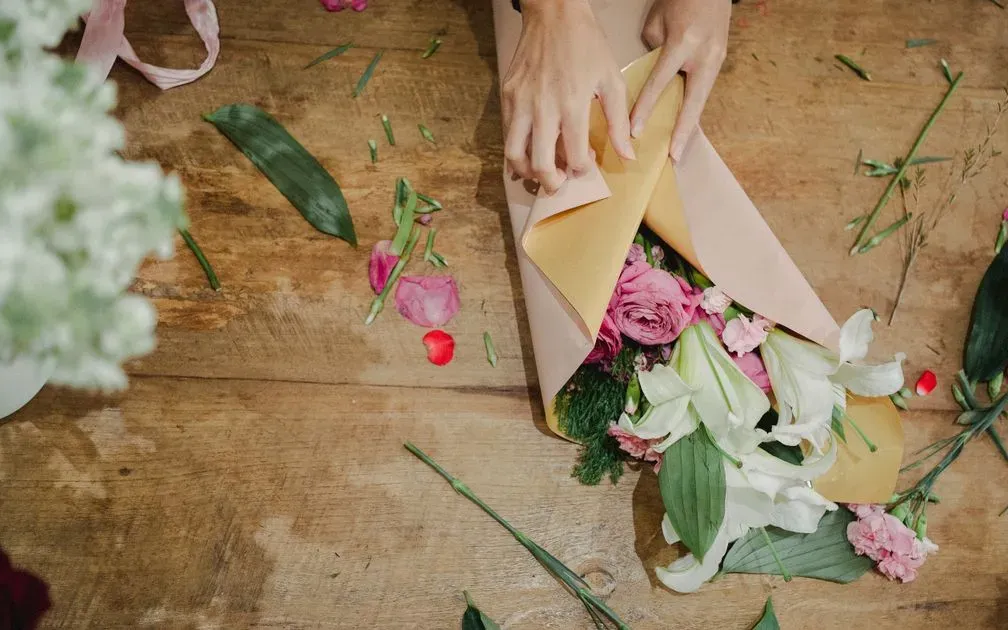
Bouquets are the easiest place to start. Leanne Kessler, director of the Floral Design Institute, demonstrates a bridal bouquet built on floral netting cut to size and molded into an armature, with no foam brick in sight. An armature is simply a shaped frame that holds each stem where you place it. For example, a bouquet you carry for a few hours rests in a vase of water before and after the ceremony, so it never needs foam to drink.
Foam earns its place for a different reason. It's made from phenol-formaldehyde plastic, which breaks down into microplastics, so I completely understand why so many of you want to skip it. Yet that same material holds water right against every cut stem end, even when a stem points sideways or straight down.
Think of it as two jobs: holding a stem in place and feeding it water. Chicken wire and pin frogs do the first job beautifully. Only a filled vessel, a block of foam or a water tube does the second.
So before you cross foam off your supply list, sort every piece by one simple question: where will each stem end sit for the next 24 to 48 hours?
Floral foam has an image problem. In a 2019 survey, 72% of florists who used foam poured its soaking water down the sink or drain.
That finding comes from a 2019 Sustainable Floristry Network survey, and it's easy to see why foam-free swaps sound like the obvious fix. Floral foam is a spongy brick of phenol-formaldehyde plastic that soaks up water, grips each stem and sheds microplastics as it crumbles. A mechanic is simply whatever holds your stems in place. For example, a loose ball of chicken wire tucked into a footed bowl is a mechanic.
Here's my direct answer. Chicken wire, pin frogs and moss match wet foam in footed bowls and vase arrangements. The trouble starts once a design leaves the vase behind, so here's your first step: for every piece on your list, ask what each stem will drink from on the wedding day.
None of these foam-free tools are new, either. Before foam arrived in the 1950s, florists arranged straight into vases or pots of water, with chicken wire or metal pins under the water line. So the old question was never wire versus foam. It was always whether each stem can reach water, and that's the question I'll walk you through, design by design.
Questions this article answers
Why does the choice between foam and chicken wire matter for your wedding now?
The mechanic under your flowers decides whether every stem stays in water, and as of October 19, 2026 our catalog sets fresh flowers and floral supplies side by side.
Picking the look is the fun part. Next comes the less glamorous part: deciding what holds each stem in place. Run every piece through these three questions before you order:
- Do the stem ends stand upright in a vessel of water? If yes, chicken wire or a pin frog can do the job.
- Do any stems hang, lie sideways or reach below the rim? If yes, plan on foam or water tubes for those stems.
- Will the piece be built early and moved to the venue? If yes, think about how it holds water on the drive, not just on the table.
Why ask now? Because the case against foam has moved from opinion to published science. A 2020 study by Trestrail and colleagues in Science of the Total Environment, now indexed in the U.S. EPA's HERO research database, found that all six invertebrate species tested ate floral foam microplastics. Floral foam is a phenol-formaldehyde plastic, and the authors concluded its particles can affect aquatic animals in two ways: through the toxic compounds they leach and through their physical presence.
Contrary to what many expect, a plant-based foam doesn't fix this. In the same study, animals ate the plant-derived biofoam at rates similar to regular foam, and biofoam leached more than twice as much phenolic compounds as the regular kind.
So foam carries a real cost. Use it only where it earns its place.
That view cuts both ways for me. Our wedding work has been featured on Style Me Pretty, Ruffled and Wedding Chicks, so I care about pieces that photograph beautifully from every angle. At Blooms By The Box we also ship premium fresh flowers nationwide, which means I care just as much about what happens to those stems once the box is open and the arranging starts. A gorgeous arch that droops before the vows helps no one, and neither does a foam-free centerpiece that tips over in the car.
Before you order, jot your answers to those three questions next to each piece on your list, so your supply order matches the designs you plan to build. Season matters here too. If your date falls this fall, our list of October wedding flowers ranked by vase life helps you pair sturdy stems with whichever mechanic you pick.
Which brings us to the real question: where does chicken wire hold its own, and where does it quietly let stems go thirsty?
What does floral foam do that chicken wire can't do on its own?
Since 2007 we've provided fresh flowers and greens, and the split is plain: chicken wire grips stems but holds no water, so it matches foam only inside a filled vessel.
Before you choose a mechanic for any single piece, run through three quick questions:
- Container: Will every stem sit inside a vase, bowl or planter you can fill with water?
- Travel: Will the piece ride to the venue already built?
- Angle: Will any stem point sideways or down, out past the rim?
A no on the first question, or a yes on the third, is where wire alone starts to struggle.
Foam-free mechanics often get billed as easy swaps. Here's the catch. Foam does two jobs at once. A 2020 Good Housekeeping guide called it both a water source and a stabilizer, reporting that it held up to 50 times its weight in water and kept a bunch looking fresh for up to 12 days. The same guide said foam made it easier to carry arrangements "to the church/marquee/doorstep in one piece," with no water sloshing about on the way.
Now look at how that guide praised the alternative. It called chicken wire and metal pins "fantastic" for securing stems, but "when arranging straight into vases or planters." That condition is the whole debate. Think of chicken wire as scaffolding, not plumbing. The wire gives a stem something to lean on, while the vase gives it something to drink, so the moment you take the vase away, the water goes with it.
| What the mechanic has to do | Wet floral foam | Chicken wire |
|---|---|---|
| Supply water to each stem | Yes, the soaked brick holds the water | No, the filled vessel around it does |
| Hold a stem in position | Yes | Yes |
| Work with no vase or planter | Yes, it carries its own water | No, stems need a container of water |
| Travel already built | Easier, with no water sloshing | Possible, though vessel water can slosh |
The guide didn't let foam off the hook, either. It said foam "contains the same amount of plastic as 10 plastic shopping bags," and it reported that the RHS, a horticultural body, planned to ban foam at its shows from 2021 while asking designers to trial alternatives "where possible." Those two words matter. Even a group pushing hard against foam left room for designs where the swap fails.
Here's why the gap hits your budget, too. Our wholesale pricing averages $3 to $4 per stem for bulk wedding varieties, so a stem that slips out of water on a long, low runner is real money wilting long before the last dance. Every bloom you paid for deserves a drink. If you're starting with a simple vessel piece, our DIY wine bottle bouquet checklist lists every supply for one.
Next, picture each piece the moment it leaves your worktable. Ask which of your pieces will live in a vase, and which have stems that will never touch one.
Where do florists who gave up foam still use it?
Ask florists who have mostly quit floral foam what they still keep it for, and their answers are remarkably specific. Each one shows which pieces on your wedding list can go without it.
In a 2020 r/florists thread, one florist wrote, "The only thing I use floral foam in is casket sprays." A second named casket sprays and compote vases as the only exceptions to greening and interlocking stems. A third kept foam "for big one or two day events" and used chicken wire or taped grids for displays meant to last a week.
Heat produced the clearest exception. In a 2023 r/FloralDesign thread, a studio that appeared to be in Texas said it used chicken wire, frogs or a crisscross greenery base for every vase and container, and basalt wool blocks for big outdoor installs. Then came a weekend forecast of 78 to 80 degrees. The studio couldn't get more blocks in time, the client insisted on outdoor delphiniums and hydrangeas, and the studio went back to foam. Another commenter warned that delicate materials struggle in the same basalt wool product, "especially outside in the sun."
Wind brings a quieter version of the pattern. In a 2026 r/florists thread about aisle pieces that tip over, one event florist had dropped foam "for most event work" and relied on metal kenzans heavy enough that they "usually prevent tipping." Another remembered a very windy venue where foam was wrapped in wire mesh and zip-tied to pavers.
Water tubes are the other fallback. A 2022 r/DIYweddings commenter described a professionally built arch of bunched chicken wire zip-tied to gazebo pillars: "For the hydrangeas and a couple of the big flowers, she had little plastic vials on the ends with water in them." Most flowers lasted from morning setup until takedown that night. A single COVID wedding capped at 10 people proves no rule. Still, it matches a shop in the 2020 thread that pairs chicken wire with tubes for short-term event pieces.
| Piece | Foam-free mechanic florists described | Where foam or water tubes came back |
|---|---|---|
| Vase and container work | Chicken wire, frogs, a greenery base or tape grids | One florist kept foam for compote vases |
| Wedding arch | Chicken wire zip-tied to the structure | Water vials on the hydrangeas and a couple of big blooms |
| Short-term event pieces | Chicken wire | Water tubes in one shop; foam for big one or two day events in another |
| Outdoor installs in heat | Basalt wool blocks | Foam, when blocks ran short for a 78 to 80 degree weekend |
| Aisle pieces at windy venues | Heavy metal kenzans | Foam wrapped in wire mesh, zip-tied to pavers |
| Casket sprays | Moss roulades, still being tested | Foam, with no replacement found yet |
Inside a vessel, the foam-free options carry costs of their own. Chicken wire is "hard to disguise unless your vase is opaque," one florist wrote. Others warned that uncoated wire "will oxidize rapidly when exposed to floral food" and that uncoated or painted wire "will flake and rust." Per Benjamin, a Stockholm florist who won the floral World Cup in 2002, told the Slow Flowers Podcast that chicken wire damages stems and sheds particles that breed bacteria in the water. Kris McKee, who runs a foam-free studio in Sydney, said on a 2023 wedding podcast that prepping vases with chicken wire takes "a little bit more time." She named speed and doubts about a reliable water source as the reasons florists keep foam.
Foam's case is stronger for holding stems than for keeping them fresh. The Sustainable Floristry Network, an advocacy group that opposes foam, cites one study finding that foam can reduce the vase life of cut roses. An experienced foam user in the 2022 thread gave it about "24 hours for peak attractiveness," and another said foam can clog stems.
The greener escapes are weaker than they look. In a peer-reviewed 2020 study in Science of the Total Environment, RMIT University researchers found that all six invertebrate species tested ate particles of both regular foam and a plant-based "biofoam."
More than twice
Biofoam particles "leached more than twice as much phenolic compounds" as regular foam particles in the 2020 lab study.
The foam's manufacturer argued that the study "does not reflect real-world conditions." Lead researcher Charlene Trestrail replied that no animals died and that each stress marker shifted by a statistically insignificant amount on its own, though together they pointed toward cellular stress.
Read side by side, the exceptions follow one boundary. Where stem ends sit in a filled vessel, our sources managed with wire, frogs or interlocking stems, and paid for it in prep time, opaque vessels and coated wire. Where stems cling to an arch, lie across a casket or face sun and wind, even florists who had largely quit foam went back to it or added water tubes. Neither biofoam nor moss clearly solves that. Going foam-free works best as a decision made piece by piece.
Before you commit to foam-free
- Sort your list into pieces whose stems will sit in a filled vessel and pieces whose stems won't, and plan foam-free mechanics for the first group.
- For arches and hanging pieces, decide which stems get water tubes. The arch in our sources needed them on the hydrangeas and the biggest blooms.
- Pair chicken wire with opaque vessels or footed compotes, and confirm the wire is coated before it sits in floral food.
- For outdoor pieces on a hot weekend, ask your florist what the fallback is if a foam alternative can't be sourced in time.
- If a foam is sold as bio, ask what it is made of before treating it as the greener choice.
How we checked this
We read four Reddit threads from 2020 to 2026 where florists and DIY couples discussed mechanics, two podcast interviews with florists, a peer-reviewed 2020 study along with its lead researcher's reply to critics, and the Sustainable Floristry Network's foam fact page. None of the figures here come from us. The Reddit posters describe themselves, so we can't verify who they are, and their posts are individual experiences, which can't establish a pattern. The Sustainable Floristry Network campaigns against foam, the foam's manufacturer disputes the study, and the study was done in a lab. We sell fresh flowers and floral supplies, so we have a stake in how you build your pieces. Still unknown: none of our sources measured how long stems last in water tubes compared with foam on a real wedding arch.
- r/florists, thread on foam, chicken wire and flower frogs, December 2020.
- r/FloralDesign, thread on the cost of foam and chicken wire, March 2023.
- r/florists, thread on keeping aisle arrangements from tipping, July 2026.
- r/DIYweddings, thread on foam, chicken wire and tape grids, June 2022.
- Kris McKee on The Feel Good Wedding Podcast transcript, March 2023.
- Per Benjamin on Slow Flowers Podcast episode 702, February 2025.
- Trestrail et al., Science of the Total Environment, floral foam microplastics study record, 2020.
- Sustainable Floristry Network, lead researcher's response to the manufacturer, August 2022.
- Sustainable Floristry Network, floral foam facts page, August 2022.
Which mechanic should you trust for each piece on your wedding list?
Trust a mixed plan: chicken wire, pin frogs or a hand-tie wherever stems sit in a filled vessel, and foam or water tubes wherever stems can't reach water on their own.
You've heard both camps argue their side by now, so let me show you where my confidence comes from. We hold a 4.7/5 average across 11,700+ verified Shopper Approved reviews, and 75% of them are five-star. Ratings like that rest on flowers that still look fresh at the party. That's why I won't hand you one mechanic and call it done.
In a 2025 episode of the Slow Flowers Podcast, Stockholm florist Per Benjamin explained that northern European florists arrange far less in foam and do more hand-tied work, so leaving foam came easier for them. A hand-tie is a bouquet or arrangement with its stems spiraled and bound in your hand, with no arranging medium at all. For example, a hand-tied bridal bouquet simply rests in a vase of water until it's time to walk. Benjamin also said chicken wire can rust and damage stems, shedding small particles that breed bacteria in the water, and he predicted florists will grow more flexible about choosing mechanics by purpose.
Purpose first. Mechanic second. That order settles most of the debate.
Your vessels shape the answer too. In an April 2026 r/DIYweddings thread, someone planning their own centerpieces noticed that almost every bulk vase they found online was clear glass, which would put chicken wire on display. A self-described busy wedding florist in the same thread warned that taping grids across many centerpieces takes real time, and that water splashing when the pieces are moved can weaken even waterproof tape.
The good news is that your flowers can carry some of the structure. Because we stock an extensive selection of bulk flowers and greenery, you can build a natural grid from stems alone; one commenter's florist friend used hydrangeas as the base so the other flowers locked into place, much as chicken wire would. If you're filling footed bowls with a soft, airy base, our guide to how much baby's breath you need helps you count stems before you order.
Here's how to sort your own list:
- Filled vessels: footed bowls and compotes take chicken wire, a pin frog or a hydrangea grid, since every stem end already sits in water.
- Hand-held pieces: bouquets go hand-tied and rest in water between photos.
- Pieces with no reservoir: low runners, hanging installations and cascading arch work need foam or water tubes (small capped vials that hold a single stem in water), because nothing else keeps each stem end wet once they're built ahead of the day.
Mark every piece with one of those three before you order a single brick, because the arch and the runner are exactly where a drop-in swap lets stems go thirsty.
Where does that leave floral foam on your wedding day?
Foam still has a job on your wedding day, just a smaller one, and the easiest way to keep it small is to settle each piece's mechanic before you place your flower order.
Even Good Housekeeping, in a 2020 guide to foam alternatives, praised chicken wire and metal pins specifically "when arranging straight into vases or planters." That qualifier is my whole argument. So if you're working with a florist, ask them which pieces on your list will sit in foam.
Foam isn't disappearing, either. Market estimates published in 2025 projected the global floral foam market reaching USD 9.4 billion by 2033, so you'll keep finding it wherever floral supplies are sold.
I'll be candid about one gap. None of the evidence here includes a side-by-side hydration check of foam against chicken wire in a low runner or an arch piece, so I can't hand you hours or percentages. What I can show you is where the water physically sits.
So start with your arch. Ask whether its stems can reach a reservoir, and if they can't, put foam or water tubes on your supply list before a single flower goes in the cart.
Summarize This Article With AI
Open this article in your preferred AI engine for an instant summary.
Frequently Asked Questions
What else do people ask about floral foam and chicken wire?
These answers cover the questions that shape your order: which mechanic to use, when your flowers should arrive, and what to do with foam afterward.
Can I use chicken wire instead of floral foam for wedding centerpieces?
Yes, as long as the centerpiece sits in a vessel full of water. Chicken wire is a flexible metal mesh you crumple into a loose ball inside the bowl, so stems lock into its gaps while they drink from the water below. For a low runner with no reservoir, I'd reach for foam instead.
What is a pin frog?
A pin frog, also called a kenzan, is a heavy metal base with upright pins that hold each stem where you press it. It sits on the bottom of a shallow dish, under the water line. That makes it a natural fit for shallow bowls where wire has little to grip.
When should my wedding flowers arrive if I'm building foam pieces?
Plan for delivery about 2 days before your event, so the flowers can rehydrate and open before you start building. Place your order 2 to 3 weeks before that delivery date, or up to 120 days ahead if you like to plan early. Ordering under 2 weeks out risks some items being unavailable.
Is floral foam being phased out?
Not soon. A market report cited by sustainability writer John Elkington in 2025 valued the global floral foam market at about USD 5.9 billion in 2024, with projected growth of about 5.4% a year. You'll want to keep in mind that foam is also sold for hydroponics, so not all of that demand is floral.
How do I dispose of used floral foam?
Put used foam in the trash, never in compost or the garden. Foam is a plastic that isn't biodegradable. Its crumbs also stick to stems, which makes those stems unsuitable for composting, so pull flowers free of the foam before anything goes in the compost bin.
Can I order wedding flowers and floral supplies in one place?
Yes. At Blooms By The Box, fresh wholesale flowers and bulk floral supplies sit side by side, and we ship premium fresh flowers nationwide with same-day shipping. Your flowers travel by FedEx Priority Overnight while supplies ship separately by FedEx Ground, so order foam, water tubes and tape early enough to have them on hand before the flowers land.
Written by
Joan
Owner, Blooms By The Box
Joan Wyndrum is a co-founder of Blooms By The Box, an online destination for fresh wholesale flowers and floral supplies.
Connect on LinkedIn