
Quick Answer
Ranunculus open best when you unbox them right away, recut each stem, and let them drink in a cool (not cold) room out of direct sun. They're cold-loving flowers. Warmth rushes them, and thirst stalls them. Give tight buds a couple of days in clean water before the wedding, and they'll fan open on time.
Blooms By The Box holds a 4.7/5 average across 11,700+ verified Shopper Approved reviews, and this care plan follows our own unpacking guide.
Key Points
- Blooms By The Box advises ordering ranunculus 2 to 3 weeks before delivery and scheduling delivery about 2 days before the event, so the buds have time to drink and open.
- The Blooms By The Box unpacking guide gives every stem at least 3 to 5 hours in water, ideally overnight , before you arrange anything, even stems that look limp.
- Budget Savvy Bride warns that food fridges "are not humid enough" and can carry bacteria, so a cool room out of direct sun is the safer place for buds.
Ranunculus are thirsty, cool-loving flowers. The research section below shows what each of those habits means for your buckets. Get those two things right, and a tight bud does the rest of the work for you.
You might expect a clear chart showing how fast a ranunculus bud opens. There isn't one. Even growers getting ready for market say they can't find a straight answer online for how long ranunculus stay in bud before they're ready to cut, so they swap notes and best guesses instead.
The plant's own habits fill in the picture. Ranunculus are cold-loving, and a 2025 r/gardening thread described their foliage yellowing and dying back in Zone 7 once heat arrives around late May to early June. That same love of cool follows the stems into your bucket. Warmth hurries them along. Thirst stalls them, and growers trace plenty of weak ranunculus back to plain underwatering.
Here's what I'll walk you through, in order:
- Why buds ship tight: what a closed bud carries, and why it's a good sign.
- What goes wrong: the causes behind stalled, drooping or rotting stems.
- The care plan: conditioning steps and a timeline that lands full blooms on your wedding day.
Blooms By The Box has supplied fresh flowers and greens since 2007, and the plan below follows our own care guidance step by step. First up: what's packed inside that tight green bud.
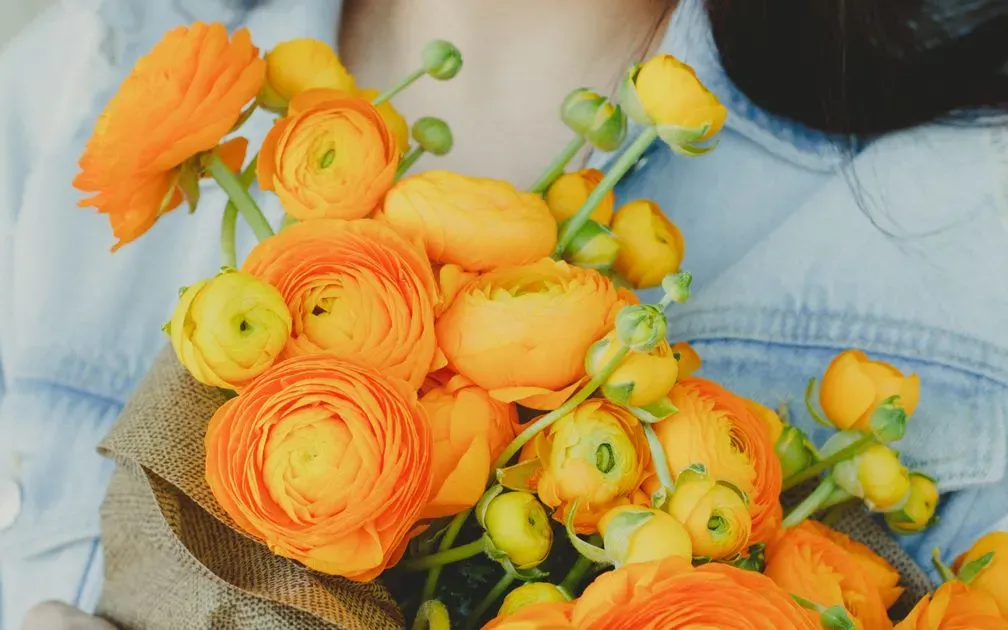
If you've ever opened a box of ranunculus and found tight green knobs instead of ruffled blooms, you probably wondered if something went wrong. It didn't. Flowers ordered online usually arrive unopened, and ranunculus are cut at a stage where the bud can still fully open on its own. A tight bud is a full tank, not a flaw. Its stem, leaves and petals hold stored sugars that power the opening after harvest.
Here's the catch. Those buds open on your schedule only if you protect that stored energy. Ranunculus are cool-weather flowers, and heat wears them down fast. In a 2024 r/Cutflowers thread, one grower in zone 7b said just two back-to-back days in the 80s left their blooms unhappy. So how warm is too warm for a bucket of cut ranunculus?
The research section below walks through what makes a bud open, stall or rot, so you can spot each problem early. I'll walk you through each one, starting with what that bud is actually holding.
Questions this article answers
Why are ranunculus shipped as tight buds instead of open blooms?
Ranunculus ship as buds because a bud travels better, still holds its stored food, and has its whole opening ahead of it when you lift it out of the box.
Before you judge the stems in your box, run through three quick checks:
- Color: look for petal color showing at the tip of the bud, not solid green.
- Feel: give the bud a gentle squeeze. A little softness, like a marshmallow, means it is ready to open.
- Next step: if a bud is green and hard, give it extra time in water before you build anything with it.
The NSW Department of Primary Industries explains why flowers are cut early in the first place. Its postharvest guide says growers cut flowers in bud or partly open to make storage, packing and transport easier and to stretch how long the flowers stay available. Its rule is simple: "Cut the flower only at a stage after which the buds can fully open."
How does a cut bud keep going? The same guide says stems, leaves and flowers store starch and sugars, and those reserves are what "allow flowers picked in bud to open." Think of a bud as a packed lunch. The food is already inside.
Conventional wisdom says a fully open bloom is the safer buy, since you can see exactly what you are getting. For ranunculus, the opposite is closer to true. An open bloom has already spent part of its reserves, and its delicate petals face the trip fully exposed, while a colored bud saves both for your arranging day.
Growers say the same thing about timing in general. In a growers' guide published by Johnny's Selected Seeds, Debra Prinzing of Slow Flowers Society surveyed five specialty cut-flower growers, and the takeaway was clear: "If flowers are harvested at their peak time and properly conditioned, they will hold better for both the farmer and for the client." A seed seller's own growing guide pitches the same habit, advising a cut once ranunculus buds begin to color, with the flowers continuing to open afterward.
Buds also move on their own clock. In one online cut-flower forum, a first-year grower watched a closed ranunculus bud reach the soft marshmallow stage in 6 days of warm weather, faster than other growers predicted. Warmth speeds buds up. Coolness slows them down.
A review of 5 sources points the same way: a bud that shows color is a flower with its best days still ahead of it. That is why we suggest delivery about 2 days before the event: it gives the buds time to drink and open. If you want to compare how other wedding stems hold up once they open, our guide to October wedding flowers ranked by vase life lays it out variety by variety.
At Blooms By The Box, we offer wedding flower packs and curated collections as well as single varieties, and the same bud logic applies to every ranunculus stem inside them. So what happens when a bud sits in the bucket and simply refuses to budge?
Why won't my ranunculus open, and what makes them droop or rot instead?
Ranunculus stall when they were cut too tight, and they droop, brown or rot when they skip a long first drink, sit in dirty water, or get wet petals.
You already know the two fears. Budget Savvy Bride named both in its 2017 DIY wedding guide: "You don't want to order things too late as the flowers may not be opened up when they need to be. At the same time, you also don't want them to be past their prime on your Big Day." Every ranunculus problem I can think of falls on one side of that line.
What does "too tight" look like?
Grower Zoe Woodward advises against picking ranunculus "in very tight bud." The stage she points to instead is the marshmallow stage: the bud shows color and gives a little when you squeeze it, like a marshmallow. That point, she says, gives the longest vase life, and stems meant for a wedding can sit a touch more open so they look their best on the day.
- Before: a solid green bud that feels hard as a pebble. It may sit in the bucket and never fully open.
- After: a colored bud that dents slightly under your thumb. Give it water and a cool room, and it unfolds.
Here's the good news. Hard buds are rare in a well-cut shipment. Most "won't open" stories turn out to be drink problems.
Why do stems droop, brown or rot?
Droopy stems on arrival are not a sign of failure. Blooms By The Box guidance, quoted in that same Budget Savvy Bride guide, says flowers "might seem kind of weak and droopy" out of the box because "they are just dehydrated from travel and will perk up when they get back in water!" Trouble starts when that water never really reaches them.
- Skipped drink: stems arranged straight away can wilt. Give them at least 3 to 5 hours in water first, ideally overnight.
- Dirty water: bits floating in the bucket can clog the stems. Woodward compares a stem to the flower's drinking straw, and a blocked straw starves the bloom above it.
- Wet petals: a flower-care product maker cautioned in 2023 that ranunculus are prone to botrytis, a grey mould, when blooms get oversaturated. Water the stems, never the faces.
- Heat: growers in an online cut-flower forum report ranunculus productivity falling at about 24°C/75°F, and one warned that a warm high tunnel "will cook them." The flower stays a cool-weather flower after it is cut.
Each cause is fixable. None of them needs special tools. If you're tucking a soft filler around your ranunculus, our guide to how much baby's breath you need helps you plan bucket space so stems aren't jammed shoulder to shoulder in murky water.
Once you can spot which side of the line a stem is on, the real lever is the clock: when the box lands, and what you do in the first few hours after you open it.
What decides whether a tight ranunculus bud opens, stalls or rots?
A tight ranunculus bud looks like a promise you have to keep. A government guide for flower growers suggests much of that promise was settled before the stem reached your bucket.
Bettina Gollnow and Neil Wade wrote the guide for the New South Wales Department of Primary Industries. A cut flower, they explain, lives on starch and sugars stored in its stem, leaves and flower. That stored food is what will "allow flowers picked in bud to open." Their instruction to growers is blunt: "Cut the flower only at a stage after which the buds can fully open."
Growers turn that rule into something you can feel with your fingers. Ranunculus should not be picked "in very tight bud," grower Zoe Woodward says in a harvesting video. The right moment is the "marshmallow stage," when the bud gives a little as you squeeze it. Gardening writer Melissa Strauss, writing for Epic Gardening, gives a color signal: cut "as soon as the buds begin to color," and the flowers keep opening after they are cut.
Once your box is open, the bud's stage is fixed. Everything after that is up to you, and water comes first. Woodward calls the stem the flower's "drinking straw," and she says ranunculus arranged straight away "can wilt." How long should that first drink last? Woodward and a 2014 Style Me Pretty tutorial suggest a couple of hours. Other sources ask for more.
FloraLife makes flower-care products, so it has a stake in care routines. Our own guide asks for at least three to five hours, ideally a whole night. A longer drink costs only time.
Limp stems on arrival are expected. "Do not be alarmed if your flowers appear wilted or dehydrated when they arrive," our unpacking guide says. After a proper rehydration, the flowers "DRAMATICALLY perk up."
Once the stems are drinking, the sources keep naming the same few culprits, and every one sits on your side of the delivery. The first is wet petals: "Ranunculus are prone to botrytis when blooms are over saturated," FloraLife warns. Dirty water is next. "Dirty water causes stem blockage," the New South Wales guide says, and it notes that stem-plugging bacteria can be present even in drinkable tap water. Leaves below the waterline "absorb water, die, and create bacteria," as our guide puts it. The last is ripening fruit. FloraLife, which sells an ethylene blocker, calls ranunculus ethylene sensitive. Gerard, host of the flower channel Roots & Roasts, puts it more bluntly: "Ethylene gas is a silent killer."
Temperature sets the pace. "Cooler air slows wilting," Gerard says. FloraLife puts professional flower coolers at 34 to 38°F with 75 to 85% relative humidity. That range describes trade equipment and does not apply in your home. Food fridges "are not humid enough" and "can carry bacteria that can infect and damage the flowers," Budget Savvy Bride warns. Our guide asks for a "cool (not cold) room" out of direct sunlight, and never a refrigerator.
| What you see | Likely cause in the sources | What to do |
|---|---|---|
| Bud stays hard and closed | Cut before it could fully open | Check softness and color on arrival, and give hard buds slightly warmer (not hot) water |
| Stems droop soon after arranging | First drink cut short | Rehydrate at least 3 to 5 hours, ideally overnight |
| Petals brown or turn moldy | Water on the blooms (botrytis) | Pour carefully and keep petals dry |
| Flowers fade early, water turns cloudy | Bacteria from dirty water or submerged leaves | Clean buckets, strip low leaves, change cloudy water |
| Blooms decline near the kitchen | Ethylene from ripening fruit | Move them away from produce |
| Buds open faster than planned | A warm room | Move them to a cool room out of direct sun, never the fridge |
Read side by side, the sources split a bud's life in two. Whether it can open was decided at harvest, by its cut stage and the food it carried. Whether it opens on your schedule without drooping or browning depends, in the failures these sources describe, on your buckets: how long it drinks, how clean the water stays, whether the petals stay dry and how cool the room is.
- When the box arrives, gently squeeze a few buds. Soft buds that show color are at the stage growers recommend. If most feel hard, our guide says slightly warmer water (not hot) speeds opening.
- Give every stem its first drink for at least 3 to 5 hours, ideally overnight, before you arrange anything, even if the stems looked limp when you unpacked them.
- Fill buckets without splashing the blooms, strip every leaf that would sit in water, and keep the flowers well away from the fruit bowl.
- Choose the coolest room in the house that is out of direct sun, and leave the kitchen refrigerator for food.
How we checked this
We drew on a government guide on cut-flower handling, a flower-care product maker's ranunculus guide, a grower's harvesting video, a gardening writer's article, a flower channel's care video, two wedding DIY guides and our own unpacking guide. The 3 to 5 hour, ideally overnight, rehydration advice is ours. The 34 to 38°F cooler range is a commercial figure from FloraLife, which also sells the care products and ethylene treatment it recommends. The government guide was written for growers and marketers and covers cut flowers in general rather than ranunculus specifically. Most other advice comes from practitioners, and none of it comes from controlled tests on ranunculus. We sell ranunculus, so we have a stake in how they perform. Still unknown: how many days a bud at a given stage needs to open in a typical home, because none of our sources measured that.
- Bettina Gollnow and Neil Wade, NSW Department of Primary Industries, guide to cut-flower care and vase life, undated archive page.
- FloraLife, ranunculus processing and care guide, December 2023.
- Zoe Woodward Gardening, ranunculus harvesting video, March 2022.
- Melissa Strauss, Epic Gardening, article on long-lasting cut flowers, February 2024.
- Gerard, Roots & Roasts, ranunculus care video, April 2025.
- Budget Savvy Bride, guide to DIY wedding flowers, August 2017.
- Style Me Pretty, late-summer arrangement tutorial, August 2014.
- Blooms By The Box, unpacking and preparing fresh flowers guide, checked October 21, 2026.
How do I condition and time bulk ranunculus so they peak on the wedding day?
Unwrap them, recut every stem and strip the leaves below the water line, then give them a long first drink and let them open slowly in a cool room before the wedding.
You already know what failure looks like. The good news is that the fix is mostly a routine. It protects the energy those buds carry, and it puts you in charge of when they open.
First, don't panic at the box. Shipped ranunculus can look a little dehydrated on arrival, and that is normal. Bruised or creased outer petals are normal too. They happen in transport, and you can pull them off at the base, the same way you would remove a rose's guard petals.
Here's how I'd handle the first few hours:
- Unwrap first: Take off the protective sleeve and any cellophane as soon as the box is open. Our unpacking guide wants every stem cut and drinking right away.
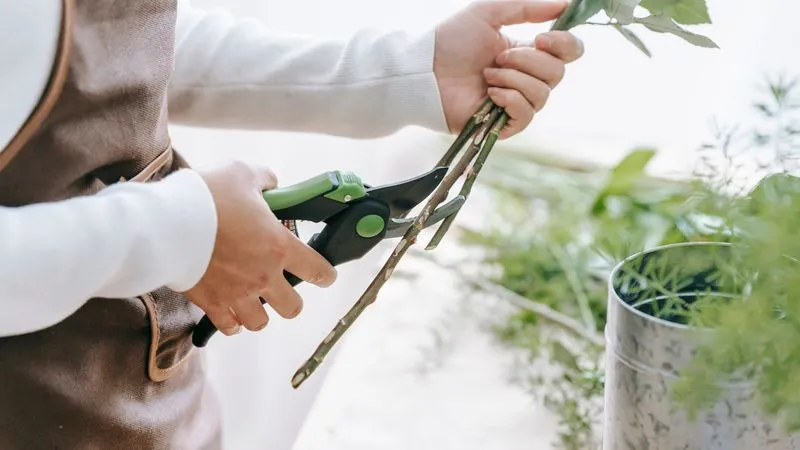
- Recut every stem: Take at least 1 inch off each stem at a 45 degree angle with clean shears, under water if you can.
- Strip, then drink: Pull any leaves that would sit below the water line, then set the stems straight into lukewarm water in a clean bucket. Submerged leaves feed bacteria, and bacteria shorten vase life.
- Let them rest: Leave the buckets in a cool (not cold) room out of direct sun, ideally overnight. A basement or an air-conditioned room works well. Skip the kitchen refrigerator entirely.
A Style Me Pretty arranging tutorial built its whole design on this same habit: a fresh angled cut and a bucket of water before any stem went near the vase. Its ranunculus went in last, as accents. That order works for you too. Hydrated stems are easier to place, and the most delicate bloom goes in after the greenery is set.
Now for the clock. Think of it as opening time: every day between delivery and the wedding is a day your buds spend relaxing in water. Plan for the flowers to land a couple of days before the event, and arrange the day before, not the morning of. Wedding flower work almost always takes longer than people expect, so that buffer is your friend.
Here's the difference in practice:
- Before: Stems dropped into a vase and arranged the same afternoon, with buds still tight on the big day.
- After: Stems unwrapped, recut and given a long, cool first drink, then time to fan out by the ceremony.
Once arranged, keep them away from heat, drafts and direct sun. Change the water every 2 to 3 days, or sooner if it turns cloudy, and give the stems a fresh trim when you do. If you're still gathering tools, my DIY wine bottle bouquet supply checklist covers the basics worth having on hand.
Some weeks, though, the buds won't follow your calendar. That's when you start steering the pace.
What should you plan for when ranunculus are the star of your wedding flowers?
Plan for opening time, not just delivery. Choose the delivery date first by counting back from the ceremony, then fit every other flower task around the days the buds need.
Here's where I land after all this evidence: the calendar around the bud matters more than the bud itself. In a 2025 r/Cutflowers thread, growers watched a warm spell push ranunculus buds open faster than anyone there predicted, and one commenter said several peonies jumped to near full bloom overnight. Heat speeds the clock. Cool slows it.
That puts the control in your hands, which is good news. You don't need a perfect bud. You need a cool spot chosen before the boxes arrive, clean buckets ready to fill, and one calm day set aside to arrange.
So before you finalize your order, pick that room. Walk in at midafternoon and check whether the sun reaches it. If it stays cool and shaded, your ranunculus already have a home.
Summarize This Article With AI
Open this article in your preferred AI engine for an instant summary.
Frequently Asked Questions
What else do people ask about caring for bulk ranunculus?
Most questions come down to timing, vase life and handling, and each one has a clear answer you can plan around before your flowers arrive.
How long do ranunculus last in a vase?
Ranunculus have a vase life of 5 to 7 days. That's why your timing matters so much. Plan your arranging day so that window covers the wedding, not the week before it.
How far ahead should I order ranunculus for a wedding?
Order 2 to 3 weeks before your delivery date, and you can place an order up to 120 days ahead. Then schedule delivery about 2 days before the event. Those two days give the buds time to rehydrate and open.
Can I get ranunculus for a fall or winter wedding?
Yes. Ranunculus are available all year at Blooms By The Box, with nationwide delivery. Your season changes the mood of the palette, not whether you can have them.
What does marshmallow stage mean?
The marshmallow stage is when a ranunculus bud shows color and feels soft, like a marshmallow, when you gently squeeze it. A bud at this point is ready to open in water.
Why are ranunculus stems so hard to work with?
Their stems are soft and hollow. They bend and crease easily, which makes wiring tricky. Handle them gently, and keep some stems a little long so you can trim later.
Ready to map out your own week? Start with your delivery date and count back.
Written by
Joan
Owner, Blooms By The Box
Joan Wyndrum is a co-founder of Blooms By The Box, an online destination for fresh wholesale flowers and floral supplies.
Connect on LinkedIn